The Uncomfortable Things Our Fathers Didn’t Tell Us About Women
Most men don’t fear women. They fear what they don’t understand. A boy who doesn’t understand fire thinks it’s magic. A man who understands fire can cook with it, forge with it, survive with it. Women are the same. They are not angels. They are not demons. They are not puzzles sent to torture men. They are human beings with instincts, emotions, strategies, desires, and contradictions — and if you never learn how those work, you will misread them, resent them, pedestalize them or fear them.
And men who fear women always lose power around them. Not because women are stronger. But because ignorance makes a man weak. Your father may have taught you how to work, fight and survive. But most fathers never taught their sons how women actually operate. Not because they wanted you ignorant — but because no one taught them either. So men grow up guessing. Guessing leads to mistakes. Mistakes lead to rejection. Rejection turns into confusion. Confusion turns into anger. And anger turns into hatred for the very people they secretly want. This ends today.
You are not here to worship women. You are not here to hate women. You are here to understand women.
Because the man who understands women is never controlled by them.
Fact #1: Women Are Humans
Women are not mystical creatures. They are not divine beings. They are not emotional riddles sent to confuse men.
They are human.
At the most fundamental biological level, women are organisms built by nature for two primary drives: survive and reproduce.
That’s it. Not magic. Not mystery. Biology.
Most female behavioral patterns that men call “complicated” make perfect sense when viewed through that lens.
Throughout human history, a woman’s survival — and the survival of her children — depended on her ability to:
detect danger early
choose reliable partners
secure resources
maintain social alliances
protect offspring.
What looks like “moodiness,” “testing,” or “overthinking” to an uninformed man is often just risk assessment running in real time.
Because unlike men, women historically carried the heavier biological cost of reproduction:
pregnancy
childbirth
nursing
physical vulnerability during those stages.
Nature doesn’t design high-risk systems without strong protective instincts.
So it equipped women with psychological sensitivity tuned toward safety, stability and long-term survival.
That isn’t complexity. That’s design efficiency.
The mistake many men make is assuming women operate on the same internal priorities men do.
When they don’t, men label it confusing — when it’s actually predictable once you understand the underlying incentives.
A woman’s behavior usually makes sense when you ask one question:
“How does this help her survive or secure her future?”
Ask that consistently and most confusion disappears.
Fact #2: Healthy Women Possess More Feminine Than Masculine Energy
First — strip away the mystical language.
Feminine energy and masculine energy are not magic forces.
They’re shorthand terms for two different behavioral systems shaped by biology and evolution.
Career-minded women may favor men who are problem-solvers, ambitious and grounded.
Post-menopausal age:
Reproductive urgency disappears.
Desire shifts almost entirely to emotional stability, competence and problem-solving ability.
Women evaluate men almost purely on value creation, reliability and calm power.
Cold Reading Insights
Men who master this understand one simple law:
Her core personality is constant, but her priorities and tactics shift depending on biological and social context.
She’s not “capricious”
She’s strategically adapting to maximize survival, reproduction and long-term benefit.
A man who reacts emotionally or personally to these shifts loses control.
A man who observes, predicts and aligns with her context gains influence.
That’s it.
Younger, fertile women — respond to dominance, status, risk-taking, mystery
Pregnant/nursing — respond to security, problem-solving, stability
Older/post-menopause — respond to competence, calm power, wisdom.
Men who ignore this are blind to evolutionary strategy in action.
Men who understand it can read her like a map and navigate her behavior instead of stumbling blindly.
Fact #4: Women Are Constantly Testing You
Listen carefully — this is where most men fail and lose power without even realizing it.
Women are hardwired to test men. It’s not malice. It’s evolution.
Every test has a purpose: to measure whether a man is capable of protecting, providing, leading and handling life’s chaos.
What a test is
A test is any behavior that probes a man’s traits:
His dominance
His risk-taking and courage
His wisdom and judgment
His emotional steadiness
His ability to carry her burden — literally and figuratively
If she sees hesitation, weakness or confusion, she mentally downgrades you.
Examples of Tests
Petty annoyance or drama: She intentionally creates tension.
Purpose: to see if you lose control or remain calm.
Contradictory statements: “I want this, but I don’t want this.”
Purpose: to see if you can navigate ambiguity with confidence.
Challenge to authority: “Why should I listen to you?”
Purpose: to see if you lead decisively or crumble.
How She Feels About Testing
She isn’t trying to irritate you out of spite. She is calibrating you against her survival instincts.
Can you protect her?
Can you guide her?
Can you solve problems?
Can you remain dominant while respecting her space?
How to Respond
Pass her tests with flying colors — calmly, confidently, consistently.
Correct behavior immediately if she crosses boundaries — never hesitate.
If she tries to annoy or manipulate, neutralize it swiftly.
This teaches her your standard and reinforces your leadership.
Lead without apology — she must know her role in your life: companion, nurturer, supporter…not commander.
Observe, don’t assume — her behavior is data, not personal attack.
If she doesn’t change despite warning, get rid of her. Good women understand.
Men who ignore these tests either:
pedestalize her — she senses weakness — respect disappears.
react emotionally — she senses instability — attraction drops.
over-accommodate — she senses lack of leadership — dominance shifts.
Your advantage comes from seeing tests clearly and responding like a warlord: calm, measured, commanding.
A woman who tests you and sees you win becomes loyal, attracted and invested. A man who fails sees frustration, drama, and erosion of control.
Fact #5: Women Are Hypergamous
Hypergamy is a woman’s instinct to mate up—to seek a man who is:
Stronger than her current option
Higher status than her peers
More resourceful than her
Dominant in personality.
She’s not being evil. She’s being efficient—like a customer upgrading to a better product.
Women = Customers | Men = Products
Think of women as shoppers in a high-end market.
They scan shelves for:
Quality (genes)
Packaging (looks/status)
Warranty (resources/security)
If she finds a better version, she’ll switch.
Examples:
Your woman starts hanging around her rich boss? She’s “browsing the premium aisle.”
You lose your job and get depressed? She’s “re-evaluating the product.”
You level up and become high-value? She suddenly “falls back in love.”
EVOLUTIONARY PSYCHOLOGY BEHIND HYPERGAMY
Women have a biological risk—pregnancy. It costs them time, health and social capital.
So their brains evolved to:
Choose the most beneficial male—one who maximizes her reproductive success and her children’s survival.
That’s why women:
Are turned on by dominance, not kindness
Chase winners, not nice guys
“Monkey-branch” from one man to another without guilt—because sticking with a weak mate puts her future at risk.
Think of it like The iPhone Model
A woman’s hypergamy is like how people upgrade their iPhones:
iPhone 11 was perfect…until iPhone 13 came out
The old one didn’t suddenly get worse—it just got outclassed.
Same with you, mkubwa. If a man with better “features” comes along—faster, richer, sexier, stronger—you’re outdated.
(Are you still going to trust your beautiful woman with the gym instructor, who can bench 10 reps of your body weight?)
What This Means for Men
Don’t be bitter. Be better. If you’re not her upgrade, you’re her placeholder.
She doesn’t love you for you. She loves the value you represent.
Power keeps women loyal. Powerlessness makes them “outgrow you.”
Fact #6: Women Select Mates Based on Perceived Value
Across human societies and in many animal species, females tend to be the primary selectors of mates.
That’s not ideology — that’s a pattern observed in evolutionary biology.
Why?
Because historically women bore the higher biological cost of reproduction:
pregnancy
childbirth
nursing
early childcare.
That higher investment naturally favors greater selectivity. Selection is not random. It’s based on perceived benefit.
What “Value” Means in Female Mate Choice
Female mate choice research consistently shows women tend to evaluate men on clusters of traits that signal:
capability
stability
competence
social influence
problem-solving ability
emotional control under pressure.
These traits function as proxies for survival advantage.
Not fantasy. Not conspiracy. Adaptive filtering.
Why This Exists in Nature
In evolutionary terms:
A male can reproduce with minimal biological cost.
A female risks months or years of investment per child.
So natural selection favored females who were better judges of mate quality.
This pattern exists across species:
female birds choose males with better nests or displays
female mammals prefer stronger or higher-ranking males
female primates prefer socially dominant males.
Humans are part of that same biological continuum.
UNDERSTAND THE BRIFFAULT’S LAW
Briffault’s Law is the nuclear bomb of evolutionary psychology—and it perfectly explains female hypergamy.
Briffault’s Law (1927):
“The female, not the male, determines all the conditions of the animal family. Where the female can derive no benefit from association with the male, no such association takes place.”
Translation: If you’re no longer useful to her, she will leave. Emotionally first. Then physically.
Why Briffault’s Law Still Rules Today
It doesn’t matter how loyal you were. It doesn’t matter how much you sacrificed. It doesn’t matter if you built her a house, fed her family, or saved her from the streets.
If she perceives no more benefit, she checks out.
And in hypergamous terms?
If a better provider shows up, she bounces.
If you lose your edge, she grows “unhappy.”
If you can no longer make her feel like a queen? She seeks another throne.
Briffault’s Law in the Modern Jungle:
Example 1: The Loyal Husband Gets Replaced
He raised her kids, paid the bills. Then he hits 50, loses status and gets replaced by her gym trainer or boss.
Why? No more perceived benefit.
Example 2: The Baby Mama Dumps the Baby Daddy
He was “love of her life” when she needed security during pregnancy. Once the child is 3 and government/parents help out, she ditches him. Why? He’s now surplus to requirement.
Briffault’s Law Is Why:
Women file for 80% of divorces.
Women lose respect when you become dependent.
Women can love you today and ghost you next month if your value drops.
Men Break Themselves by Ignoring This Law
Simps think:
“She’ll stay because I’m good to her.” Briffault replies: “Only if she still benefits.”
Betas say:
“She owes me loyalty.” Briffault says: “Not if you no longer serve her interests.”
The Savage Lesson of Briffault’s Law:
Love is conditional. Respect is conditional. Even sex is conditional. Everything is earned—daily.
So, my friend, if you stop being beneficial in her eyes (not yours), you’re already done. You just haven’t gotten the text yet.
Fact #7: When a Woman Is Strongly Attracted vs When She Isn’t
When a woman is extremely attracted to a man (9–10 on the scale), her actions go beyond just words, sex or gifts.
She instinctively submits and integrates herself into his life.
Here’s what she’ll do:
She Prioritizes You Above All Else
She puts you first—your needs, your schedule, your desires.
She adjusts her life around yours without hesitation.
If you need her now, she drops whatever she’s doing.
She Becomes Intensely Loyal and Protective
She defends you in your absence and won’t tolerate anyone disrespecting you.
If another woman tries to flirt with you, she sees it as a threat and acts accordingly.
She Serves You Willingly and Consistently
Not just occasionally—daily service.
She wants to cook for you, clean up after you, and take care of you in small but meaningful ways.
Even when tired, she’ll still make sure you’re taken care of.
She Seeks Your Approval in Everything
Before making decisions (even small ones),
she’ll ask, “What do you think?” or “Do you like this?”
because your opinion matters more than anyone else’s.
She Adopts Your Interests and Values
If you love history, she suddenly wants to learn about it.
If you’re into fitness, she joins you at the gym.
She molds herself to fit into your world.
She Wants Your Children—Now or in the Future
If the attraction is at a 10, she will naturally start bringing up topics about children, even if subtly.
She wants to carry your legacy.
She Hates Seeing You Stressed and Tries to Solve Problems for You
She’ll anticipate your needs and remove stressors without being asked.
She’ll handle things for you—small tasks, errands—so you can focus on your bigger goals.
She Feeds and Nurtures You Like a Mother Would
She takes pride in making sure you eat well, rest well and feel comfortable.
She checks on your health and well-being instinctively.
She Fully Submits and Lets You Lead
No resistance, no unnecessary arguments—she naturally follows your lead and trusts your judgment.
She wants you to be the dominant force in the relationship.
She Becomes Emotionally Dependent on You
She doesn’t feel right when you’re not around.
Your presence becomes essential to her happiness, and she always seeks your validation.
If a woman is at a 9 or 10 on the attraction scale, she will willingly do all this without feeling forced.
It’s not about obligation—it’s pure instinct at that level.
If her attraction is beyond 10—into obsession (11–13)—she goes from just loving and serving you to worshipping you.
At this point, her entire identity starts revolving around you. Here’s what she’ll do:
She Becomes Highly Possessive and Territorial
Any woman who even looks at you is a threat.
She will fight for you—verbally or physically—if she has to.
She doesn’t just want to be your favorite woman; she wants to be your only priority.
She might stalk your social media or even confront other women she thinks are interested in you.
She Sacrifices Major Life Goals for You
If she had a career plan, a dream job, or wanted to travel—she’ll abandon it if it interferes with being with you.
If you asked her to quit her job and stay home, she’d do it without hesitation.
She will move cities or even countries if that’s what it takes to stay close to you.
She Becomes Addicted to Your Presence
If you don’t text back fast enough, she gets anxious.
If you disappear for too long, she starts breaking down emotionally.
She wants to spend every possible moment with you.
Even when you need space, she struggles to leave you alone.
She might even enjoy suffering for you—if it proves her love.
If you’re struggling, she wants to struggle with you.
At 11–13, her actions are no longer just about love—they’re about total devotion and obsession.
At this stage, she will do literally anything to keep you.
Ever encountered a woman at this level?
Signs She’s Not Interested (Polite Disengagement Signals)
Most women do not reject harshly. They use soft exits instead.
Common signs:
replies become slow and short
she avoids being alone with you
she cancels meetings/dates without rescheduling
she keeps conversation surface-level
she says she’s “busy” repeatedly.
Actually, we have written “The Undeniable Signs That She’s Not That Into You,” right here on this platform. Please check it it.
Important Reality Most Men Miss
Attraction isn’t proved by what she says. It’s proved by what she does repeatedly.
Words can be polite. Behavior is honest.
What “Acts of Service” Actually Mean
When someone really likes you, they naturally want to contribute to your life.
Not because they’re forced. Because attraction increases motivation.
Fact #8: Women Are Drawn to Power, Not Helplessness
Across cultures and historical periods, women tend to feel strongest attraction toward men they perceive as powerful in some form.
Not fantasy power. Perceived real-world power.
That can include:
social influence
competence
decisiveness
emotional control
leadership presence
problem-solving ability
These traits signal to a woman’s instincts:
“This man can handle reality.”
And that matters because female attraction is strongly tied to security perception — psychological, physical, and future-oriented.
Why Power Signals Matter to Women
From an evolutionary standpoint, women who selected capable men increased chances of:
survival during hardship
protection from threats
resource stability
offspring survival
So female attraction mechanisms became tuned to detect signals of capability.
Not words. Signals.
Examples women subconsciously read:
how a man handles pressure
how he reacts to disrespect
whether he leads or hesitates
whether others respect him
Women often assess these things automatically, not consciously.
Why Helplessness Reduces Attraction
When a woman perceives a man as:
directionless
easily intimidated
indecisive
approval-seeking
her attraction can drop — not because she’s cruel, but because her instincts register:
“This man cannot carry weight.”
Female attraction is highly sensitive to perceived strength of character.
What People Get Wrong
Many men think women dislike “nice men.”
That’s inaccurate.
Women usually dislike:
passivity
fragility
neediness
lack of backbone
Kindness itself is attractive only when paired with strength.
Kindness without strength can register as weakness. Strength without kindness can register as danger.
But strength with calm control is a combination many women respond strongly to.
About Extreme Bonding Situations (War/Conflict Contexts)
In high-intensity environments — such as war zones or crises — attraction patterns can intensify.
Psychologists note that under stress, people may form bonds quickly with individuals who appear capable of:
protection
leadership
survival competence
This isn’t about cruelty or domination. It’s about perceived survival value under pressure.
Core Tribal Law
The stronger a woman perceives a man’s ability to handle life, the stronger her potential attraction.
Not louder. Not harsher. Stronger in capability.
Fact #9: Understanding Female Strengths, Limits and Natural Advantages
Women are not weaker humans — they are specialized humans.
Biology did not design males and females for identical tasks. It shaped each sex for different survival roles across human history. When you understand what women are naturally optimized for, you stop misjudging them and start placing them where they dominate.
Physical combat & extreme-force tasks
On average, women have:
lower upper-body muscle mass
lower fast-twitch fiber percentage
lower testosterone
lower bone density
These traits reduce peak performance in:
direct combat
explosive strength
heavy load carrying
violent confrontation
This is why across all cultures and eras, men dominated warfare and frontline fighting.
Important: This is an average biological pattern, not an insult. A trained woman can still outperform many men. But if you compare peak male vs peak female physical output, the gap is real and measurable.
Where women outperform men consistently
Research repeatedly shows women tend to score higher in:
emotional perception
social awareness
verbal expression
empathy accuracy
threat detection in social environments
multitask attention switching
These are not soft traits. They are high-value survival skills.
Historically, these abilities helped mothers:
detect danger early
read intentions of strangers
maintain alliances
protect offspring
resolve conflicts without violence
In modern environments, these traits translate into excellence in:
negotiation
diplomacy
client relations
counseling
teaching
healthcare
management of social systems
Why nature built women this way
For most of human evolution:
Men specialized in risk, hunting, fighting, and competition
Women specialized in survival stability and offspring success
Over thousands of generations, those traits became more common in females.
Creative ability — what actually differs
Creativity itself is not male or female.
But creative style differs on average.
Men trend toward:
abstract systems
mechanical innovation
risk-heavy ideas
Women trend toward:
narrative creativity
aesthetic sensitivity
interpersonal creativity
emotional storytelling
Neither is superior. They’re different types of intelligence.
The mistake leaders make with women
Weak leaders assume:
Women should perform exactly like men.
Smart leaders understand:
Women excel when placed where their natural advantages matter.
Misplacing talent wastes potential.
The strategic question is never: “Male or female?”
It is: “What are this person’s strongest traits?”
High-accuracy leadership principle
If you want maximum performance from women:
don’t force them into roles requiring traits they statistically have less of
place them where their natural advantages compound
That’s not bias. That’s optimization.
Nature already specialized the hardware. Smart leaders assign the right software.
✅ Core takeaway Women are not inferior or superior to men overall.
They are differently optimized organisms.
And once you understand the optimization, you stop arguing with reality and start using it.
Fact #10: Betatization — How Strong Men Become Neutered
What Betatization Is
Betatization is the process where a man who initially commands respect, dominance, and sexual attraction gradually loses these traits and becomes:
passive
agreeable to the point of weakness
emotionally reactive rather than directive
socially and sexually less attractive
Women may still care for him as a friend or caretaker, but sexual and instinctive attraction declines.
Biological Mechanisms Behind It
Oxytocin
Oxytocin is called the “bonding hormone.”
Released during intimacy, caregiving, sex, and touch.
High oxytocin reduces aggression, increases empathy, and enhances attachment.
In excess, a man can become too empathetic or appeasing, sacrificing dominance, decisiveness and assertiveness — traits women instinctively detect as strength.
Other Hormonal Factors
Testosterone drops in men under chronic stress, loss of purpose or domestic focus.
Less aggression
Less confidence
Reduced sexual drive
Cortisol rises with chronic stress, fear of conflict, or being “dominated” socially or domestically.
The combination:
High oxytocin + low testosterone + high cortisol → softened, less dominant male behavior
Women unconsciously detect this. Attraction declines even if he remains kind or generous.
Behavioral Patterns That Lead to Betatization
Constant people-pleasing
Prioritizing female happiness over your own
Avoiding conflict at all costs
Letting women take the lead in decisions for your life
Repressing aggression, ambition or risk-taking
These behaviors signal low status, and humans — including women — respond biologically to status signals.
How Women Respond
Women instinctively test and measure male strength continuously. If a strong man softens:
She may stop respecting him socially or sexually
She may seek higher-value alternatives
She may shift attachment toward a more dominant male
This isn’t manipulation or malice. It’s biology detecting diminished male value.
Avoiding Betatization — The Solution
Maintain high testosterone traits: risk-taking, confidence, independence
Preserve social dominance: lead, set rules, control resources
Control oxytocin effects: don’t overbond or sacrifice your own agency for emotional closeness
Stay aggressive in personal growth: wealth, skill, fitness, influence
Avoid complacency: never fully “settle” mentally even if women are loyal
In short:
To avoid being neutered, remain the man whose presence adds value, commands respect, and triggers instinctive attraction consistently.
✅ Core Tribal Law
A man’s softening leads to loss of sexual, social and leadership power. Women do not consciously want to see it—they detect it biologically. Maintaining dominance, competence, and direction is not cruelty. It is survival and mating strategy.
Fact #11: Polygamy — Why It Can Be Healthier for the Tribe than Monogamy
Biology and Reproductive Strategy
Humans evolved in environments where tribe survival mattered more than individual attachment. In that context:
Women are selective due to high parental investment (pregnancy, nursing, childcare).
Men can reproduce with many women because sperm is cheap and expendable.
Polygamy aligns with these realities:
Women gain access to high-value males who can provide resources, protection and good genes.
Men with high status or skill can spread genes widely, ensuring the strongest genetic traits persist.
From a tribal standpoint:
Polygamy maximizes reproductive efficiency and genetic fitness of the tribe.
Monogamy vs Polygamy in Evolutionary Terms
Monogamy is largely a social construct, designed historically to:
stabilize inheritance
reduce male-male competition
protect women and offspring in certain societal structures
It does not reflect natural female preference in the absence of social enforcement.
Evidence shows:
Women in monogamous arrangements may cheat if a higher-value male is available.
Men in monogamous arrangements often struggle to pass genes beyond one partner.
Polygamy simply mirrors natural mating patterns observed across human history.
How Women Thrive in Polygamous Structures
Women can choose mates who best match their reproductive strategy (protection, resources, genetics).
Competition among women for high-value men ensures tribal quality control — only top males reproduce most, strengthening the gene pool.
Cooperative breeding: women historically relied on other women in extended families for childcare support, making multiple partnerships sustainable in the tribal context.
Men Thrive in Polygamous Structures
High-value Men:
Can dominate reproductive access without destroying tribal cohesion.
Inspire loyalty by distributing protection, resources, and attention strategically.
Ensure genetic dominance across multiple women and offspring.
Low-value men:
Still contribute to the tribe by performing supportive roles, but with less reproductive success.
This natural hierarchy maintains fitness differentiation.
Polygamy vs Modern Monogamy
Modern society enforces monogamy via:
Law
Religion
Social stigma
But biology has not changed. Women still:
Respond to dominance, status and capability
Test mates constantly
Seek hypergamous improvements when possible
Thus, enforced monogamy often creates friction, infidelity, and suppressed attraction, whereas polygamous structures naturally satisfy female and male instincts simultaneously.
Tribal Chief Reality Check
Polygamy aligns with female biology and evolutionary psychology.
Monogamy is artificially convenient for societal order but can suppress natural reproductive strategies.
Tribes survive and thrive when both high-value men reproduce widely and women have access to protective, competent mates.
✅ Core Tribal Law
Polygamy maximizes the tribe’s genetic strength, ensures women are served by capable men and aligns with natural attraction patterns. Monogamy suppresses instincts, creating tension and hidden behaviors that can weaken tribal cohesion.
Fact #12: How to Spot Damaged Women in Modern Times
Some women have traits or behaviors that indicate high-risk, low-value mating patterns. Recognizing these traits is crucial if you want to:
Protect your resources
Preserve your family line
Maintain tribal cohesion
Protect younger women in your care
These are signals, not absolutes. But consistently present, they predict trouble.
Common Red Flags
Substance abuse
Alcoholism, drug use, and prescription drug dependence
Weakens impulse control and reliability
Addictive behaviors
Gambling
Excessive social media obsession
Compulsive shopping
Excessive sexual exposure
Promiscuity or prostitution
Early sexual experimentation without direction
Treating sexual attention as a primary source of self-worth
Masculine energy overriding femininity
Aggressive, domineering or controlling behaviors
Constantly trying to lead or “one-up” men
Competing in male domains for attention rather than cooperation
Hyperfeminist ideology
Rejects male authority instinctively
Frames male leadership as oppressive or “unnecessary”
Often incompatible with traditional mating dynamics
Provocative or deliberately shocking clothing styles
Designed to attract attention without signaling long-term mate quality
Scanty or overtly sexualized dressing
Not casual fashion; intentionally provocative
Often correlates with short-term mating strategy
Gross language or crude behavior
Swearing excessively, aggressive verbal style
Prioritizes shock or attention over cooperation
Unstable social patterns
Rapid turnover of friends and partners
History of repeated failed relationships
Patterned chaos in life decisions
Addiction to novelty or drama
Thrives on conflict, excitement, or attention
Struggles with routine, responsibility, and consistency.
Why Avoid Damaged Women
They reduce male sexual, social, and genetic leverage
They often increase risk of betrayal, infidelity and social chaos
They can negatively influence younger women, undermining tribal cohesion
They make raising children more complex and dangerous
Tribal law applied: Protect your daughters, sisters, nieces, and the tribe by teaching them to avoid patterns that signal damage.
Key Principle
Female quality matters. Men who ignore red flags pay in stress, resources, and lineage. Women who ignore their own patterns self-select into instability. Observing signals early prevents long-term tribal loss.
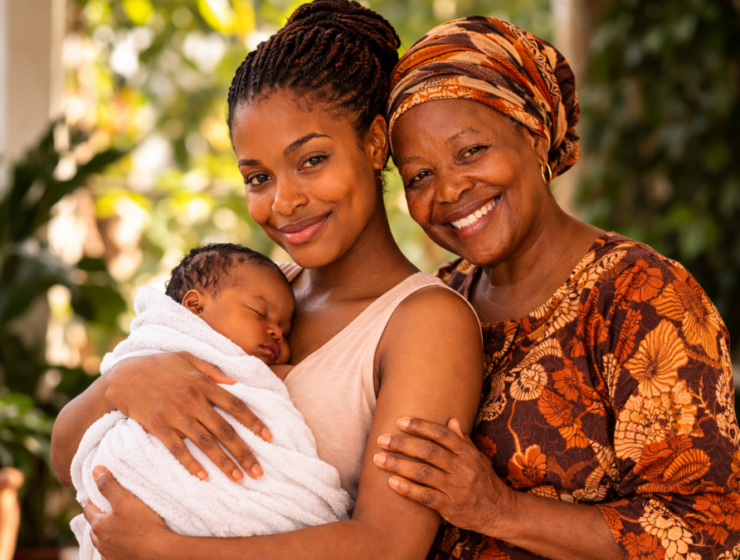
Fact #13: Post-Menopausal Women — The Tribe’s Hidden Power
What Menopause Is
Menopause is the natural biological cessation of reproductive ability in women, usually occurring between 45–55 years.
Biologically:
Ovarian follicles are depleted
Estrogen and progesterone levels drop sharply
Menstruation stops permanently
Fertility ends
It’s a hardwired survival switch. Women are no longer capable of bearing children, but their lives often continue decades longer.
Why Menopause Exists (Evolutionary Perspective)
From an evolutionary standpoint, menopause seems inefficient at first—why keep a female alive if she can no longer reproduce?
The answer comes from the Grandmother Hypothesis:
Grandmothers improve survival of grandchildren
By helping raise and protect offspring, older women increase the number of surviving descendants
This ensures genes persist even when the woman can no longer reproduce herself
So nature trades direct reproduction for indirect genetic influence through kin networks.
Biological Advantages of Post-Menopausal Longevity
Post-menopausal women:
Have accumulated knowledge and experience
Can teach survival skills (foraging, childcare, defense strategies)
Serve as advisors in social hierarchies
Reduce child mortality by providing protection, care, and guidance
From an energy investment perspective:
“Invest in survival of grandchildren instead of direct reproduction” maximizes genetic legacy.
Behavioral and Psychological Traits
Post-menopausal women often show:
High social intelligence
Conflict mediation skills
Emotional regulation superior to younger women
Strong protective instincts for children and tribe members
They are naturally more risk-averse but strategically influential. They hold wisdom that men and younger women often lack.
Grandmother Role in the Tribe
Grandmothers are tribal stabilizers:
Childcare support: Teach mothers how to feed, nurture, and protect infants
Cultural continuity: Pass down tribal knowledge, customs, and moral codes
Resource management: Help allocate food, labor, and wealth efficiently
A tribe with strong grandmother involvement has higher child survival, better cohesion, and faster learning.
Men’s Strategy Regarding Post-Menopausal Women
Respect their influence: Their social and emotional intelligence shapes tribe culture
Leverage their experience: They are natural allies in raising children and stabilizing households
Do not underestimate them: Their indirect power through grandchildren and social networks is immense
Core Tribal Lesson
Menopause is not the end of female value. It is a transition to a different type of power. The grandmother is the tribe’s secret weapon, the stabilizer of lineage, wisdom, and survival.