
Business schools will teach you accounting.
Finance.
Strategy.
Marketing.
Operations.
Organizational behavior.
Then you will walk into the real world and discover that the business does not give a damn about your MBA. 😂
Because building a company is not a classroom exercise.
It is a collision with human nature.
People will promise you things they cannot deliver.
Customers will tell you one thing and do another.
Co-founders will discover they have different definitions of sacrifice.
Employees will have ambitions that have nothing to do with yours.
Competitors will copy you.
Gatekeepers will resist you.
Cash will disappear faster than you thought mathematically possible.
And sometimes the biggest threat to the business will be sitting comfortably inside the organization you built.
You will discover that strategy without execution is decoration.
That talent without commitment is dangerous.
That equity does not automatically create ownership mentality.
That technology cannot automate trust.
That money can amplify stupidity just as efficiently as it amplifies intelligence.
And that some of the most expensive lessons in business arrive disguised as perfectly reasonable decisions.
This is the MBA that nobody puts on the curriculum.
No euphemisms.
No motivational posters.
No corporate perfume.
Just the brutal anthropology of building a company.
Let us begin.
BRUTAL LESSON #1: BUILDING A SCALABLE BUSINESS IS WAR

Stop thinking of entrepreneurship as opening a shop and hoping customers walk through the door.
Building a scalable business is war.
Not literal war.
But the psychology is remarkably similar.
There are scarce resources.
There are territories.
There are competitors.
There are alliances.
There are betrayals.
There are soldiers.
There are generals.
There is intelligence.
There is deception.
There are weak points.
And there is one unforgiving reality:
Someone else is trying to win the same customer.
If you want to build something enormous, you must become a war strategist.
Read.
Study.
Observe.
Think.
Execute.
Then study what happened.
Repeat.
You need to understand markets, technology, finance, psychology, negotiation, distribution, incentives, human behavior and power.
You should know more about your battlefield than the average person knows about their own business.
Ignorance is expensive.
And you cannot build a serious company while being psychologically naïve.
You will encounter people who flatter you.
People who lie.
People who copy you.
People who pretend to support you while waiting for you to fail.
People who want your employees.
People who want your customers.
People who want your information.
People who want your position.
If you cannot read people, people will read you.
This is where understanding the so-called Dark Triad becomes useful—not because you should become a psychopath, narcissist or manipulator, but because you need to understand the darker forces that operate inside human beings:
ego.
status.
self-interest.
calculation.
deception.
power.
Know them.
Recognize them.
Protect yourself from them.
And learn how incentives shape behavior.
Because you will need soldiers.
But do not recruit soldiers merely because they are talented.
Recruit people who can fight.
People who think.
People who execute.
People who can carry responsibility without being spoon-fed.
People who remain functional when the plan collapses.
People who understand that the mission comes before their comfort.
Then build your command structure.
Give people clear objectives.
Give them resources.
Give them authority.
Hold them accountable.
And do not fight every battle.
A foolish founder attacks everything.
A strategist chooses where to concentrate force.
Sometimes you compete.
Sometimes you partner.
Sometimes you move quietly.
Sometimes you let your competitor believe you are going one direction while you build somewhere else.
Sometimes the smartest move is to ignore them completely.
You do not have to destroy your opponents.
You have to become so strategically difficult to defeat that they cannot stop you.
And never confuse brutality with stupidity.
A businessman who burns relationships, breaks trust and behaves dishonestly is not necessarily a strategist.
He may simply be an idiot with an ego.
Real strategic power is colder:
Know the battlefield.
Know the players.
Know your strengths.
Know their weaknesses.
Control your emotions.
Protect your information.
Move faster when speed matters.
Stay patient when patience creates advantage.
And most importantly:
Think several moves ahead.
Because the amateur asks:
“How do I beat my competitor today?”
The strategist asks:
“What position do I need to occupy three years from now so that competing with me becomes extremely difficult?”
That is how businesses become formidable.
Not through motivational quotes.
Through knowledge, strategy, execution, people and relentless adaptation.
You are not entering a classroom.
You are entering a battlefield.
BRUTAL LESSON #2: DO NOT START A ME-TOO BUSINESS
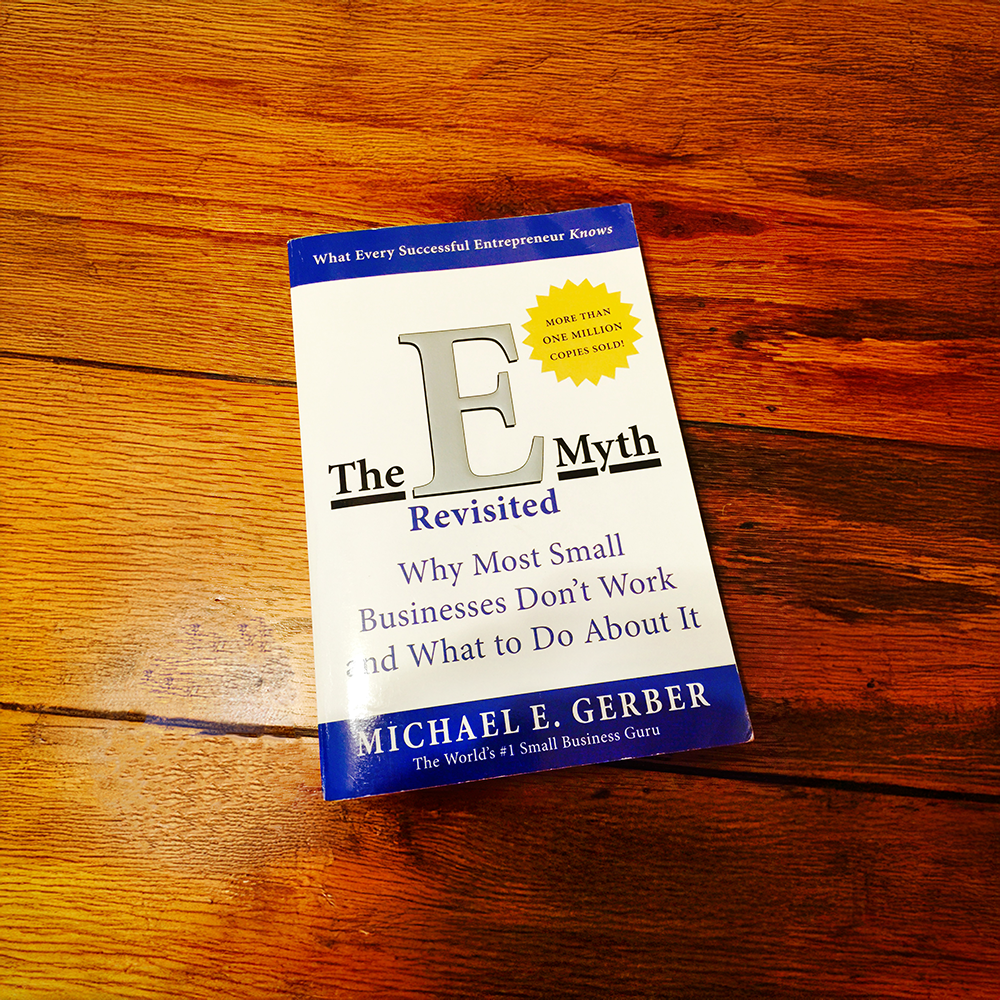
One of the stupidest ways to start a business is to look around, see someone making money, and say:
“I can do that too.”
You open a restaurant because restaurants are busy.
You start a clothing brand because someone else’s clothes are selling.
You build an app because apps are fashionable.
You start a real estate company because someone is making money in real estate.
You copy another company’s business model, change the logo, add three features, and convince yourself you are an entrepreneur.
You are not.
You are following a footprint.
There is nothing wrong with competition.
But there is something deeply dangerous about starting a business without discovering a problem of your own.
A serious business begins with a painful question:
“What problem do millions of people have that is still being solved badly?”
Not:
“What business is making money?”
That distinction can cost you years.
Business schools often teach entrepreneurship using examples of businesses that already exist.
Amazon.
McDonald’s.
Apple.
Uber.
Airbnb.
Then the student leaves the classroom thinking:
“I need to build something like that.”
Wrong.
The lesson should be:
“What problem existed before that company was born?”
Because businesses are not born from business models.
They are born from problems.
If you cannot identify a problem that potentially affects 1 million people, pause.
Go back into the world.
Walk around.
Listen.
Watch.
Talk to people.
Look for frustration.
Look for inefficiency.
Look for money leaking through cracks.
Look for things people have accepted as “normal” simply because nobody has fixed them properly.
Problems are everywhere.
Your problem is not that there are no business ideas.
Your problem may be that you have been trained to look for businesses instead of problems.
And there is another danger.
When you copy an existing business, you inherit its assumptions, its limitations and often its ceiling.
You become another fish swimming in an already crowded pond, desperately trying to convince customers that your fish is slightly shinier.
The real entrepreneur asks:
“Why does this problem still exist?”
And then:
“Why hasn’t anyone solved it properly?”
That second question can lead you somewhere very uncomfortable.
Because sometimes the answer is:
“Nobody has been crazy enough to try.”
And sometimes…
the problem is not the idea. It is the people, incentives and system surrounding it.
BRUTAL LESSON #3: YOUR BUSINESS MUST BE SCALABLE

If your business becomes successful, can it serve 10 people, 10,000 people and 10 million people without multiplying its costs and headaches at the same rate?
If the answer is no, you do not have a scalable business.
You may have a job wearing a business costume.
Scalability means your ability to increase customers, transactions or revenue much faster than you increase the resources required to serve them.
A barber can cut only so many heads in a day.
A consultant can personally serve only so many clients.
A mechanic has only so many hours.
A restaurant needs more tables, kitchens, staff and space to serve dramatically more customers.
These businesses can be excellent businesses.
But their growth is tied heavily to people, time, physical space or equipment.
That is the first level.
LEVEL 1: LINEAR
More customers require roughly proportionally more resources.
1 barber → 10 customers.
10 barbers → roughly 100 customers.
You can grow.
But you keep buying more human hours.
Then comes:
LEVEL 2: LEVERAGED
You build systems that allow the same human effort to serve many more people.
Think of a consulting firm with standardized processes, trained teams, software and repeatable delivery.
You are no longer selling only your own hours.
You are building a machine.
Then:
LEVEL 3: DIGITAL SCALE
Software, platforms, digital products and automated systems can serve enormous numbers of users without requiring an equal increase in employees.
One piece of software can serve 1,000 users.
Then 100,000.
Then millions.
The cost does increase—but often nowhere near as fast as the number of users.
And then there is the beast:
LEVEL 4: NETWORK SCALE
This is where the business becomes extremely powerful.
The users help create the value of the network.
Marketplaces.
Payment networks.
Social networks.
Two-sided platforms.
The more participants join, the more useful the system can become.
But don’t misunderstand me.
Scalability is not “having an app.”
You can put a terrible business inside an app and simply create a very efficient machine for losing money.
The real question is:
Can you distribute your solution repeatedly, cheaply, reliably and at enormous volume?
Because there is a dark side to building something that does not scale.
You become the bottleneck.
Every new customer creates another problem.
Every new location requires another person.
Every increase in sales creates another pile of work.
Revenue goes up.
But complexity goes up with it.
You become the human API of your own company.
Eventually you are not building a company.
You are feeding a monster you created.
So before starting a business, ask:
Can I solve this problem for 100 people?
Then:
Can I solve it for 10,000?
Then:
Can I solve it for 1 million?
Without hiring 1 million people?
Without opening 1 million branches?
Without personally touching every transaction?
Without costs swallowing every additional shilling of revenue?
If you cannot see a path to scalable distribution, stop and think again.
Find the leverage.
Automate what can be automated.
Standardize what can be standardized.
Train other people to reproduce what you do.
Use software where software genuinely creates leverage.
Build partnerships and distribution channels.
Design the business so that success does not break it.
Because here is the uncomfortable truth:
A business that cannot scale may eventually be trapped by its own success.
And the next lesson gets even more uncomfortable.
BRUTAL LESSON #4: YOU CANNOT BUILD A SCALABLE BUSINESS ALONE

There is a beautiful lie entrepreneurs tell themselves:
“I can do everything myself.”
No.
You cannot.
You may start alone.
You may even survive alone.
But if you intend to build something large, eventually reality will come knocking with a bill you cannot pay with enthusiasm.
A scalable business needs skills.
Technology.
Finance.
Sales.
Operations.
Marketing.
Strategy.
Legal.
Customer service.
Product.
People management.
And those are only the obvious ones.
Then there is time.
Your day still has 24 hours.
Your brain still gets tired.
Your body still needs sleep.
And some business tasks are brutally repetitive.
You cannot spend your life doing everything from writing strategy to answering customers, fixing software, reconciling accounts, recruiting people, chasing payments and solving yesterday’s fire.
Eventually, you become the bottleneck.
Then there is money.
Then mental energy.
Then decision fatigue.
Then the simple fact that you are one human being with one personality.
You might be brilliant at vision and terrible at operations.
You might be aggressive in sales and terrible with numbers.
You might see the future but miss the details sitting directly in front of you.
This is why serious companies need different minds.
Not clones.
Complementary personalities.
The strategist.
The builder.
The operator.
The communicator.
The numbers person.
The person who remains calm when everyone else is screaming.
That is why, for a serious scalable business, co-founders can be necessary.
But here is where founders make a catastrophic mistake.
They recruit people who are merely available.
Or people they like.
Or friends.
Or relatives.
Or people who sound intelligent.
Or worse:
people who want the title of “co-founder” but the security of an employee.
Don’t do it.
A co-founder is not simply an employee who receives equity.
A co-founder is supposed to carry part of the founder’s burden.
When the company is bleeding, they don’t disappear.
When the plan fails, they don’t fold their arms and say, “That wasn’t my department.”
When money gets tight, they don’t suddenly rediscover their alternative career.
When things become difficult, they don’t start calculating how quickly they can escape.
You need fighters.
Not mercenaries.
You need generals with balls of steel.
People capable of standing in the middle of uncertainty and saying:
“Fine. What do we do next?”
That does NOT mean every co-founder must be reckless, work 24/7, or sacrifice their entire life.
It means they must have founder-level ownership of the mission.
Because a co-founder with an employee mindset can fuck you up.
You think you have an army.
You actually have someone waiting for instructions.
You think you have a partner.
You actually have someone protecting their employment package.
You think they are carrying the company with you.
They may simply be carrying their job.
Know the difference.
And there is another brutal rule:
Do not build a company with ten co-founders because you are afraid to offend people.
Choose carefully.
Agree on roles.
Agree on ownership.
Agree on decision-making.
Agree on what happens when someone wants out.
Agree on what sacrifice actually means before the battlefield gets hot.
Then, as the company grows, build the next layer:
employees.
Employees are not inferior.
They simply have a different contract with the company.
You need excellent employees.
But don’t confuse an employee’s relationship with the company with a founder’s relationship with the mission.
One is hired to perform a role.
The other helped create the battlefield.
Choose your generals before you recruit your soldiers.
Because the wrong co-founder doesn’t merely fail to help you build the company.
They can become one of the things you have to survive.
BRUTAL LESSON #5: YOUR BUSINESS WILL NEED CAPITAL

Here is another uncomfortable truth:
A serious, ambitious, scalable business usually needs more money than the founder has.
Yes, you can bootstrap.
Your savings.
Family.
Friends.
Profits from another business.
Side hustles.
You can start with almost nothing.
And sometimes you should.
But if you are trying to build a company capable of serving millions of people, eventually you may hit a wall that motivation cannot break.
Capital.
Business school taught us that lack of capital can cause business failure.
But I don’t think they screamed this loudly enough.
Because capital is not simply money sitting in a bank account.
Capital buys speed.
It pays engineers before the product generates enough revenue to pay them.
It funds marketing before the brand is known.
It puts people on the ground before the network exists.
It buys infrastructure before millions of customers arrive.
It gives you the ability to experiment, make mistakes, recover and try again.
It allows you to build the machine before the machine is producing enough cash to build itself.
And there is a brutal mathematical problem here.
You can have an enormous opportunity and still lose because your competitor can move faster than you.
You are building with Ksh 5 million.
They are building with Ksh 500 million.
You may have the better idea.
But ideas don’t pay salaries.
Ideas don’t buy servers.
Ideas don’t produce television campaigns.
Ideas don’t recruit 500 people.
Ideas don’t survive eighteen months without revenue.
Capital does.
That is why ambitious founders must learn another profession:
Fundraising.
If you are building a venture-scale company, you should know how to explain your business to:
VCs.
Angel investors.
Family offices.
Strategic investors.
Banks.
Institutional capital.
And you should not wait until your bank account is screaming.
Build your pitch deck.
Update it.
Know your numbers.
Know your market.
Know your economics.
Know exactly what the money will build.
Know what milestones the capital should produce.
Know why the opportunity is large enough to justify the investment.
And learn to sell the vision without becoming a bullshit artist.
Because fundraising is not begging rich people for money.
It is convincing capital to join a machine you are building.
And here is something many founders get wrong:
They raise money because they are desperate.
Don’t.
Raise because you know what capital will do.
If Ksh 100 million enters the company tomorrow, what changes?
How many people can you reach?
What infrastructure gets built?
What distribution becomes possible?
What revenue engine gets accelerated?
What becomes possible that was impossible yesterday?
If you cannot answer those questions, you probably aren’t ready for the money.
And don’t romanticize bootstrapping either.
Bootstrapping is admirable.
But sometimes the founder becomes so obsessed with avoiding dilution that they accidentally preserve a tiny company.
There is nothing heroic about starving a potentially enormous business to protect 100% ownership of something that never got built.
Ownership of what?
A beautiful spreadsheet?
The goal is not to own 100% of a small dream.
The goal is to build something valuable.
Capital is the fuel.
Your job is to build an engine worthy of the fuel.
BRUTAL LESSON #6: IT TAKES YEARS TO BUILD A PROFITABLE BUSINESS

One of the most dangerous things you can carry into entrepreneurship is the expectation of quick results.
You can work for weeks and see almost nothing.
Months can pass with little evidence that you are winning.
You can pour money into something and watch the bank balance move in the wrong direction.
You can make decisions nobody understands.
You can build something people don’t immediately appreciate.
And then wake up the next morning and do it again.
And again.
This is why building a serious business requires a psychological constitution that most people never develop.
You need the ability to work when the scoreboard is still showing zero.
You need extreme tolerance for uncertainty.
You need enough energy to survive long periods where effort and reward are violently disconnected.
You need emotional control when things go wrong.
You need physical health because exhaustion eventually makes stupid decisions look intelligent.
And you need a mind capable of constantly processing new information.
Customers change.
Competitors move.
Technology changes.
Markets shift.
Your own assumptions collapse.
You must learn.
Adapt.
Think.
Create.
Decide.
Repeat.
Entrepreneurship is sustained cognitive warfare.
But patience does NOT mean sitting inside a bad business for ten years because you are “persistent.”
That is stupidity disguised as perseverance.
There is a critical distinction:
Be patient with the timeline.
Be ruthless with the strategy.
If you are on the right track, patience becomes an enormous advantage.
You can keep improving the product.
Keep building distribution.
Keep learning the customer.
Keep strengthening the team.
Keep compounding relationships.
Keep accumulating data.
Keep getting better.
While impatient competitors quit.
But if the underlying problem isn’t real…
If customers don’t care…
If the economics don’t work…
If distribution is impossible…
If nobody wants what you are building…
time will not rescue you.
Time only compounds whatever direction you are travelling.
That means a founder needs two things simultaneously:
The patience of a farmer.
And the paranoia of a general checking the map every morning.
Plant.
Work.
Wait.
Measure.
Correct.
Continue.
Because building a serious business is rarely:
Idea → Launch → Money.
It is more often:
Idea → Failure → Learning → Adjustment → More failure → Better system → Small traction → More learning → Distribution → Compounding → Profit.
And somewhere in that ugly middle, most people quit.
They thought entrepreneurship was about having a brilliant idea.
They discover it is also about having the stamina to remain intelligent while reality keeps punching you.
So before you start building, ask yourself one terrifying question:
“Can I keep going when the evidence of success is still invisible?”
Because if you cannot…
do not start a business that takes years to build.
And…
make damn sure you are building the right thing.