
Most Kenyan men are born into a war they never declared.
You inherit poverty, ignorance, disease, and a society where connections can matter more than competence.
You grow up, get a job, surrender your best hours to a boss, struggle to pay rent and are told to be grateful for survival.
Meanwhile, your time is disappearing.
Your body is weakening.
Your ambition is being sedated.
Your freedom is shrinking.
And every time you attempt to break out of the cage, another obstacle stands in your way.
Welcome to the battlefield of the Kenyan man.
In the Tribe of Doctor Kimbo, success means POWER: control over your life, your body, your time, your money, your decisions, and your destiny.
It means building wealth, achieving supreme health, developing a formidable mind, creating a scalable business and establishing a family dynasty that outlives you.
But nobody is going to hand you that power.
You must identify the obstacles, expose the traps, shatter the limitations, and fight your way out.
If you were born with nothing, you cannot afford to live like a man with nothing to fight for.
POWER vs POWERLESSNESS: THE BRUTAL REALITY OF HUMAN SOCIETY
WHAT EXACTLY IS POWER?
POWER IS THE ABILITY TO CONTROL THE CONDITIONS OF YOUR LIFE, MAKE YOUR OWN DECISIONS AND INFLUENCE THE OUTCOMES THAT MATTER TO YOU.
Power is having options when others have none.
It is being able to say NO without fearing that your entire life will collapse.
Imagine two Kenyan men.
One hates his job but cannot resign because his children need school fees, his landlord demands rent and his family needs food.
His employer knows he cannot afford to leave.
The man swallows his frustrations and reports to work every morning.
The other man has enough wealth and independent income to walk away.
His boss can threaten to fire him, but the threat carries little weight.
He has alternatives.
Both men can resign. Only one can afford to. THAT IS POWER.
Power is having the money to leave a destructive relationship rather than remaining trapped by financial dependence.
It is being able to access medical treatment when you need it, rather than watching a treatable illness destroy your health because you cannot afford care.
It is owning assets that generate income instead of depending on someone else’s willingness to employ you.
It is having the influence to make your voice heard while millions of other voices are ignored.
It is having the freedom to question authority, reject manipulation and make decisions without living in constant fear of other people’s reactions.
It is being able to give your children opportunities that were never available to you.
Power is not simply money, physical strength or the ability to command other people.
It is the capacity to determine what happens in your own life and, where your influence extends, to affect what happens around you.
POWER IS THE DIFFERENCE BETWEEN HAVING A CHOICE AND BEING FORCED TO ACCEPT WHATEVER YOU ARE GIVEN.
WHAT IS POWERLESSNESS?
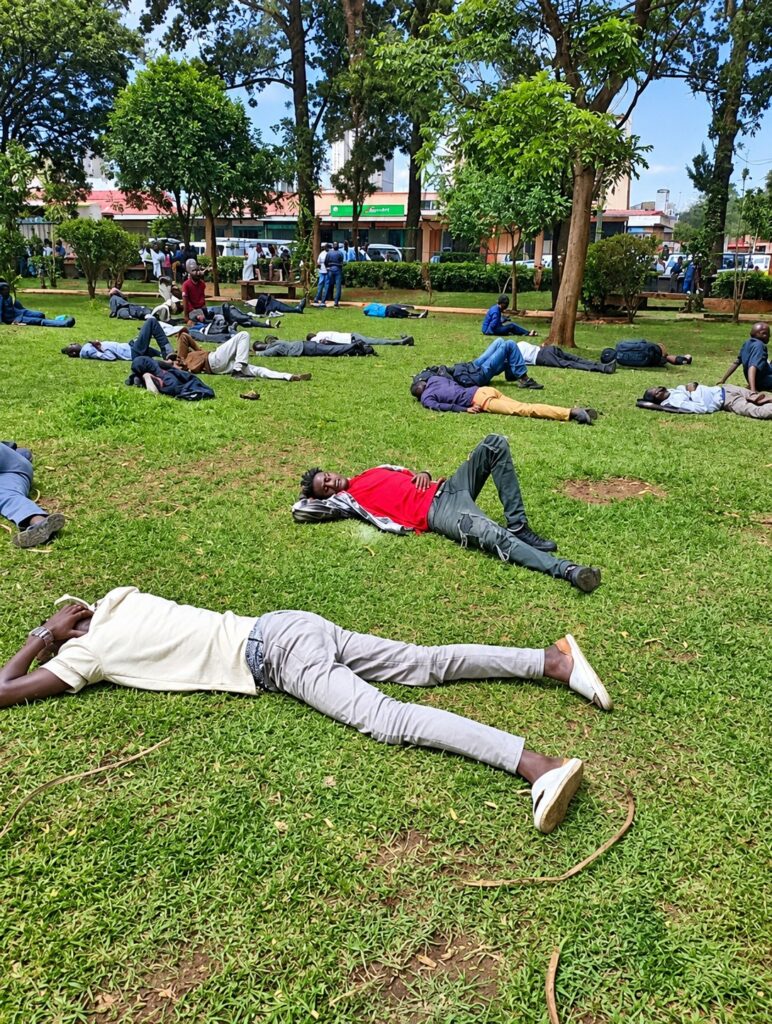
Powerlessness is having little control over the circumstances that determine your life.
It is desperately wanting to change your situation but lacking the means to do so.
It is working for years yet remaining one emergency away from financial disaster.
It is watching your landlord increase the rent when you have nowhere else affordable to go.
It is accepting humiliation from your employer because losing your job would leave you or your family hungry.
It is watching corrupt leaders make decisions that affect your future while having little influence over those decisions.
It is wanting to give your children a better life but being unable to afford the opportunities they need.
It is remaining in a situation you hate because the cost of leaving is greater than what you can bear.
And the cruelest part?
YOU CAN BE INTELLIGENT, HARDWORKING, TALENTED AND AMBITIOUS—YET STILL BE POWERLESS.
A brilliant man without resources may have fewer choices than an average man who inherited wealth.
A hardworking man may remain trapped in poverty while someone who owns productive assets grows richer.
Life does not distribute power according to effort, intelligence or good intentions alone.
Powerlessness is not proof that a man is worthless.
It is a condition in which his ability to determine his own circumstances is severely restricted.
WHY DOES POWER MATTER SO MUCH?
Because the world does not respond to everyone equally.
Money, ownership, knowledge, influence and institutional position affect whose decisions carry weight, whose interests receive protection and who can afford to walk away when circumstances become unbearable.
The wealthy can pay for options that the poor cannot afford.
The powerful can negotiate terms that the powerless must accept.
The influential can get meetings that ordinary people struggle to secure.
The person with assets can survive a temporary loss of income. The person living from payday to payday may face a catastrophe.
The person with alternatives can reject an unfair deal. The person with no alternatives may have to accept it.
THE SAME THREAT CAN BE A MINOR INCONVENIENCE TO ONE MAN AND A LIFE-DESTROYING CRISIS TO ANOTHER. THE DIFFERENCE IS POWER.
This is why power affects far more than material comfort.
It affects freedom, dignity, security, relationships, opportunities and the ability to determine one’s future.
Power does not guarantee happiness or wisdom.
A wealthy man can be miserable, and a poor man can live with dignity. But dignity does not erase the practical consequences of having few choices.
WHAT HAPPENS TO THE POWERFUL—AND THE POWERLESS?
Those who possess wealth, assets, influence and institutional access generally have greater capacity to shape their circumstances.
They can withstand financial shocks, access specialized services, negotiate from a position of strength and influence decisions that affect their interests.
Their resources can create further opportunities, allowing advantages to accumulate across generations.
Their children may inherit property, businesses, education, networks and a financial cushion that protects them from the struggles their parents faced.
The powerless experience a different reality.
They are more vulnerable to decisions made by employers, landlords, lenders, political leaders and institutions.
A single illness, job loss or family emergency can undo years of effort.
They may have to sacrifice long-term ambitions to meet immediate needs.
Their children may inherit the same disadvantages—not because they lack potential, but because their parents lack the resources to provide a different starting point.
This is how power can reproduce itself, while powerlessness can become entrenched.
THE POWERFUL HAVE MORE ROOM TO MAKE MISTAKES, RECOVER FROM FAILURE, AND TRY AGAIN.
THE POWERLESS OFTEN PAY A MUCH HIGHER PRICE FOR THE SAME MISTAKE.
That is the brutal inequality of power.
And that is why, in the Tribe of Doctor Kimbo, power is not merely about being rich, famous, or feared.
It is about the extent to which a man has control over his own existence—and how much of his future is determined by forces beyond his control.
OBSTACLE TO POWER NO. 1: IGNORANCE — YOU CANNOT CONQUER A WORLD YOU DO NOT UNDERSTAND

THE MOST DANGEROUS THING ABOUT IGNORANCE IS THAT YOU CAN BE IGNORANT WITHOUT KNOWING IT.
You can spend 30 years on this earth, attend school, earn certificates, get a job, raise children, pay taxes and still understand very little about how the world actually works.
You can be educated on paper and ignorant in the things that determine whether you become wealthy, healthy, influential, independent or successful.
And that is where the trap begins.
Most Kenyan men inherit their parents’ ignorance. Their parents inherited it from theirs.
Generation after generation, men enter the world with limited knowledge, pass through an education system that leaves critical gaps, and graduate believing they are prepared for life.
Then reality punches them in the face.
They discover that nobody taught them how to build a profitable business, understand human psychology, negotiate, market a product, manage money, build influence, evaluate investments or identify manipulation.
They know how to answer examination questions. But can they identify a profitable opportunity?
They know how to follow instructions.
But can they build an organisation that employs hundreds of people?
They have memorized facts.
But can they investigate a problem, challenge conventional wisdom and develop an original solution?
YOU CAN SPEND YEARS IN SCHOOL AND STILL BE UNPREPARED FOR THE VERY LIFE YOU ARE TRYING TO WIN.
Our education system provides valuable knowledge and professional skills.
But academic qualifications alone do not guarantee practical competence in entrepreneurship, leadership, wealth creation, or independent thinking.
Too many people leave school knowing how to seek employment without understanding how businesses create value, how ownership builds wealth, or how markets reward those who solve problems.
They learn about business in theory but may never learn how to find customers, price a product, manage cash flow, persuade a buyer, or survive a financial crisis.
They learn about leadership but may never learn how to recruit excellent people, resolve conflict, build a strong team, or hold people accountable.
They learn facts but are not always taught how to question the source, test the evidence or distinguish truth from confident nonsense.
And then society wonders why so many people struggle.
A MAN CANNOT EXERCISE POWER IN AREAS HE DOES NOT UNDERSTAND.
Information is power because knowledge changes what you can see, what you can anticipate, the decisions you can make, and the mistakes you can avoid.
An ignorant investor can lose his life savings to a convincing fraudster.
An ignorant entrepreneur can spend years building a product nobody wants.
An ignorant father can pass destructive beliefs to his children without ever examining them.
An ignorant citizen can be manipulated by politicians who understand his fears better than he understands their interests.
An ignorant man can mistake entertainment for progress, confidence for competence, and tradition for truth.
And the worst part? He may defend the very beliefs keeping him trapped because he has never encountered a better explanation.
THE TRIBE MUST BECOME STUDENTS OF THE WORLD
Read books widely.
Study psychology, human behaviour, persuasion, business, marketing, agriculture, health, technology, leadership, economics, politics, history, warfare, relationships, child development, and systems thinking.
Study how powerful institutions operate. Study how businesses grow and collapse. Study how wealth is created and destroyed. Study how people make decisions, how societies change, and how ordinary people become vulnerable to manipulation.
Listen to experienced entrepreneurs. Learn from successful men, but investigate their claims rather than worshipping them.
Watch educational videos. Examine evidence. Compare competing explanations. Ask difficult questions.
Play chess. Solve Sudoku. Challenge your mind to recognize patterns, anticipate consequences, and solve unfamiliar problems.
Question beliefs you inherited from your parents.
Question traditions you have never examined.
Question religious, political, and cultural claims without assuming that age, popularity, authority or confidence makes something true.
Be especially careful with information designed to provoke outrage, sell you something, capture your attention or make you obedient.
Television, social media, religious institutions, political movements, and even books can spread misinformation.
Evaluate their claims individually.
No source deserves unquestioning loyalty.
And remember: reading everything is not the goal.
UNDERSTANDING MORE OF THE WORLD IS THE GOAL.
Information without judgement can make you confidently wrong. Knowledge must be tested, connected, and applied.
The world is interconnected.
Psychology influences marketing. Economics influences politics. Technology changes business. Health affects productivity. History reveals patterns. Power shapes institutions. A discovery in one field can transform your understanding of another.
The more connections you recognize, the less likely you are to be trapped by a narrow understanding of reality.
You do not need to become an expert in everything.
But you must know enough to ask intelligent questions, recognize danger, evaluate opportunities, and know when to seek expertise.
Because the world will not protect you from the consequences of what you do not know.
OBSTACLE TO POWER NO. 2: LIMITING RULES — THE GAME IS NOT DESIGNED FOR YOU TO WIN

In Kenya, sometimes it feels as though you need permission to breathe, permission to trade, permission to build and permission to keep the money you earn.
You want to start a business? Prepare for licences, permits, levies, inspections, paperwork and fees.
You want to expand? More requirements may follow. You finally make a profit? The taxman wants his share.
For a small entrepreneur, every new requirement can mean another expense, another delay, another office to visit and another opportunity for someone to demand a bribe.
Meanwhile, some well-connected people appear to navigate the same systems with advantages that ordinary citizens do not enjoy.
YOU ARE EXPECTED TO BUILD WEALTH IN A GAME WHOSE RULES YOU DID NOT WRITE.
Look at land. Vast tracts of public land and other underutilized resources could potentially support housing, agriculture, manufacturing and enterprise.
Yet access to land is constrained by ownership, planning laws, infrastructure, financing and bureaucracy.
A man with the intelligence and ambition to solve a problem may lack the resources or permissions to act.
Look at governance. Politicians make decisions that affect your business, your property, your taxes and your future.
When public institutions serve private interests, when corruption distorts competition or when regulations protect established players at the expense of new entrants, ordinary citizens pay the price.
Look at the legal system. Justice may be guaranteed on paper, but pursuing it can demand money, time, legal expertise and connections that many people lack.
A right you cannot practically enforce can feel painfully distant.
And then there are the rules nobody wrote into law.
Traditions that punish ambition.
Social expectations that discourage independent thinking.
Family obligations that can consume every resource you accumulate.
Cultural norms that demand conformity even when conformity keeps you stuck.
Some restrictions serve legitimate purposes. Taxes can finance public services. Business regulations can protect consumers. Laws can prevent exploitation and protect property rights.
But bad rules exist. So do unnecessary barriers, conflicting requirements, selective enforcement, and systems corrupted by people who profit from your dependence.
THE PROBLEM IS NOT THAT EVERY RULE IS DESIGNED TO DESTROY YOU. THE PROBLEM IS THAT EVERY RULE CAN AFFECT YOUR LIFE, WHILE YOU MAY HAVE LITTLE POWER TO INFLUENCE HOW IT IS MADE OR ENFORCED.
THE POWERFUL MAKE THE RULES—AND OFTEN HAVE MORE POWER OVER HOW THEY ARE APPLIED
People with wealth, influence, legal expertise and political connections can often navigate complex systems more easily than those without them.
They can hire lawyers, lobby policymakers, absorb regulatory costs, wait out delays, and challenge unfavourable decisions.
A struggling entrepreneur may abandon a business because of compliance costs. A large company may employ an entire department to handle them.
The same administrative burden can be a minor inconvenience to one organisation and a death sentence to another.
When powerful interests influence legislation to protect their advantages, competition suffers.
When public officials demand bribes, honest entrepreneurs are punished for refusing to participate.
When institutions enforce rules selectively, the law loses its credibility.
This is how systems can preserve existing advantages without every official needing to conspire with every other official.
And when people become accustomed to these conditions, they begin treating dysfunction as normal.
They say, Hii ni Kenya.
They pay the bribe. Accept the delay. Abandon the application. Give up on the business. Stop demanding accountability.
Eventually, the obstacle becomes part of the culture.
THE TRIBE MUST LEARN TO NAVIGATE THE SYSTEM
You cannot afford to be ignorant of the rules governing your life.
Understand the laws that affect your business, property, taxes, contracts, and rights.
Know which requirements are mandatory, which decisions can be appealed, which exemptions legally apply and which institutions are responsible for enforcing them.
Understand the difference between a law, a regulation, an administrative procedure, and a social expectation. They are not the same thing.
When a rule is unfair, investigate whether it can be challenged, appealed, amended, or overturned.
Build alliances with people who possess the knowledge and influence to help you navigate difficult systems.
Support reforms that remove unnecessary barriers and demand accountability from those who exercise public power.
And when you are tempted to break a rule, understand the consequences before acting.
A shortcut that saves you money today can cost you your business, your freedom, or your entire future tomorrow.
STRATEGY IS NOT BLIND OBEDIENCE. BUT IT IS NOT RECKLESS LAWBREAKING EITHER.
Some rules deserve obedience because they protect people and make society function.
Others deserve challenge because they are unjust, counterproductive, or selectively applied.
The important thing is to know the difference.
Never assume that a rule is permanent merely because it exists.
Laws can be amended. Regulations can be challenged.
Institutions can be reformed. Traditions can be abandoned.
And never assume that because something is common, it is legal—or that because something is legal, it is fair.
The powerful may have greater influence over the rules, but that does not make every rule untouchable.
LEARN THE RULES. UNDERSTAND WHO BENEFITS FROM THEM. IDENTIFY YOUR LEGAL OPTIONS. CHALLENGE WHAT MUST BE CHALLENGED. CHANGE WHAT CAN BE CHANGED.
Do not let ignorance of the system become another chain around your neck.
And whatever you do, do not sacrifice your freedom for a shortcut that was never worth the price.
OBSTACLE TO POWER NO. 3: DISTRACTIONS — THEY ARE SELLING YOU THE THINGS THAT KEEP YOU WEAK

HOW ARE YOU SUPPOSED TO BUILD AN EMPIRE WHEN YOUR ATTENTION IS BEING AUCTIONED OFF TO THE HIGHEST BIDDER?
Every day, you wake up with limited time, limited energy, and a life that is moving towards its end.
You have wealth to build, a body to strengthen, a mind to sharpen, a business to establish, children to raise, and a legacy to create.
Yet everywhere you turn, something is screaming for your attention.
Come and drink.
Come and bet.
Come and watch football.
Come and scroll.
Come and argue about politics.
Come and watch strangers have sex.
Come and fight religious wars.
Come and spend your precious hours watching other people live their lives while your own remains unfinished.
And they package these distractions beautifully. They call them entertainment, leisure, recreation, culture, passion, and lifestyle.
They advertise them. Sponsor them. Celebrate them. Build entire industries around them.
THE MOST DANGEROUS DISTRACTIONS ARE THE ONES YOU DEFEND AS YOUR RIGHT TO HAVE FUN.
Think about it. You complain that you have no money, yet you spend your evenings betting on football matches.
You complain that you have no time, yet you donate hours to social media.
You complain that your business is struggling, yet you can tell someone the entire Chelsea squad but cannot explain your own cash flow.
You say you want to become a powerful man, but your daily habits are funding the destruction of your own ambition.
Who exactly is sabotaging you?
Sometimes, the answer is staring at you in the mirror.
LOOK AT THE DISTRACTIONS AROUND YOU
ALCOHOL AND DRUGS. Entire industries profit from products that can impair judgement, damage health, consume money, and create dependence.
A man can spend years financing his own decline while convincing himself he is merely relaxing.
GAMBLING AND BETTING. You are struggling to build wealth, so someone sells you the fantasy of acquiring it through a lucky prediction.
Instead of building an asset, you risk the money you already have on an uncertain outcome. The house has a business model. You have a dream.
FOOTBALL AND SPORTS OBSESSION. There is nothing inherently wrong with sport. Exercise builds health and watching a match can be harmless recreation.
The problem begins when a grown man knows every statistic about his favourite team but knows nothing about building his own financial future.
He celebrates another man’s victory while his own life remains stuck in the same place.
TV NEWS AND SOCIAL MEDIA. Every crisis demands your attention. Every controversy demands your opinion. Every stranger’s life invites comparison.
You consume outrage, gossip, fear, and endless commentary until your mind is exhausted—but what have you actually built?
POLITICS AND PSYCHOLOGICAL MANIPULATION. Political actors compete for your attention, loyalty, anger, and votes.
You can spend years fighting your neighbours over politicians who will never know your name, while the decisions affecting your livelihood pass without your scrutiny.
Your emotions become somebody else’s political resource.
PORNOGRAPHY AND SEXUAL DISTRACTIONS. You want to build a family, develop real relationships, and become a disciplined man, yet you can surrender hours to watching strangers perform for a camera.
Sexual pleasure is natural. But when compulsive consumption begins displacing real relationships, work, sleep or personal goals, you are paying a serious price for a few minutes of stimulation.
RELIGIOUS CRUSADES. Faith can provide meaning, community, and moral guidance.
But religious institutions and movements can also consume a man’s time, money, and independent judgement when they demand unquestioning loyalty, encourage endless conflict, or promise rewards while discouraging practical action in this life.
These things STEAL FROM YOUR MISSION.
THEY ARE IN THE BUSINESS OF CAPTURING YOUR ATTENTION
You must understand something about the modern world.
Your attention has economic value.
Advertisers pay to capture it. Betting companies compete for it. Social platforms profit from engagement. Entertainment businesses compete to keep you watching. Political campaigns work to influence what you notice, what you fear and what you believe.
Many products are deliberately designed and marketed to encourage repeated consumption. Some exploit predictable weaknesses in human psychology. Some make money when you spend more time, take more risks or return more frequently.
They do not all need to coordinate with one another to produce the same result.
THEIR BUSINESS MAY BENEFIT FROM YOUR ATTENTION. YOUR LIFE WILL BENEFIT FROM TAKING IT BACK.
And here is the brutal part: nobody has to force you to waste your life if they can persuade you to do it willingly.
They do not need to chain you to a chair. They need to make the distraction more attractive than the difficult work waiting for you.
They do not need to steal every shilling from your pocket. They can sell you enough little pleasures to leave you with nothing substantial to invest.
They do not need to destroy your ambition overnight. They can help you postpone it, one evening at a time.
Meanwhile, your competitors are studying, building, investing, training and creating.
Time does not stop because you are entertained.
Your rent does not disappear because you watched a thrilling match.
Your business does not improve because you won an argument online.
Your body does not become stronger because you watched someone else compete.
And your children do not inherit your favourite team’s trophies.
THE KENYAN MAN IS TRYING TO SOLVE CALCULUS IN THE MIDDLE OF A MARKETPLACE
Imagine trying to understand a complex mathematical problem in the middle of a crowded market.
Traders are shouting. Music is blaring. People are arguing. Motorcycles are hooting. Everybody wants your attention.
You might be intelligent enough to solve the problem, but concentrating becomes unnecessarily difficult.
That is what life can become when you allow distractions to occupy space in your mind.
You want to build a business, but your attention is scattered.
You want to accumulate wealth, but your money leaks into unnecessary consumption.
You want to become physically strong, but your sleep and training suffer.
You want to think independently, but your mind is saturated with other people’s opinions.
You want to build a dynasty, but you keep postponing the work required to establish one.
Then you wonder why years pass without meaningful progress.
YOU CANNOT GIVE YOUR BEST ENERGY TO EVERYBODY ELSE’S ENTERTAINMENT AND EXPECT TO HAVE ENOUGH LEFT TO BUILD YOUR OWN EMPIRE.
THE TRIBE MUST LEARN TO SAY NO
Not everything legal deserves your participation.
Not everything popular deserves your attention.
Not everything pleasurable deserves your time.
Not every invitation deserves your presence.
Not every controversy deserves your opinion.
Not every urge deserves to be satisfied.
Ask yourself a brutal question: What is this activity costing me and what am I getting in return?
Watching Chelsea play Arsenal might provide enjoyment, relaxation and social connection.
Attending a wedding might strengthen a valuable relationship.
A political meeting might help you organize for better governance.
Religious participation might provide community and meaning.
But if these activities consume the time, money, and attention required to fulfil your responsibilities and ambitions, you must examine their place in your life.
The question is not whether an activity makes you happy for an hour.
The question is whether your overall way of living is moving you towards the life you want—or quietly carrying you away from it.
SHORT-TERM PLEASURE CAN BE REAL. SO CAN ITS LONG-TERM COST.
You do not need to eliminate every pleasure. You need to stop allowing pleasure to become your master.
Enjoy sport without surrendering your identity to it.
Socialize without destroying your finances.
Relax without abandoning your responsibilities.
Pursue pleasure without sacrificing your health, relationships or future.
And when an activity undermines the life you claim to want, have the courage to walk away.
Because nobody is coming to return the hours you wasted.
Nobody is going to refund the years you spent distracted.
Nobody will compensate your children for the opportunities you never built.
YOUR ATTENTION IS YOUR LIFE IN SMALLER UNITS. WHERE YOUR ATTENTION GOES, YOUR LIFE GOES.
Guard it like a man whose future depends on it.
Because it does.
OBSTACLE TO POWER NO. 4: LOST MASCULINITY — THEY ARE NEUTERING BOYS BEFORE THEY BECOME MEN

HOW THE HELL ARE YOU SUPPOSED TO CONQUER THE WORLD WHEN YOU HAVE BEEN TRAINED TO FEAR YOUR OWN STRENGTH?
From childhood, many Kenyan boys are taught to suppress the very traits they will later need to compete, lead, build businesses, defend their interests and stand their ground.
Be quiet. Be obedient. Do not fight. Do not challenge authority. Do not be too aggressive. Do not be too ambitious. Do not be too proud. Do not question what your elders tell you.
And when you finally become a man, society expects you to be confident, courageous, financially successful, physically strong, decisive, competitive, and capable of leading a family.
YOU CANNOT SPEND TWENTY YEARS BREAKING A BOY’S SPIRIT AND THEN EXPECT HIM TO BECOME A FEARLESS MAN OVERNIGHT.
THEY START NEUTERING YOU WHEN YOU ARE A BOY
Many boys grow up without guidance from strong, responsible male role models.
Some are raised in environments where assertiveness is mistaken for disrespect, physical confidence is treated as a threat, and every expression of aggression is condemned.
The boy who stands up for himself is told to stop being difficult.
The boy who competes fiercely is told that winning is not everything.
The boy who questions authority is labelled stubborn.
The boy who wants to become rich is warned against greed.
The boy who wants to be physically strong is accused of showing off.
The boy who refuses to be intimidated is told to humble himself.
Of course, boys need discipline. They must learn self-control, respect, responsibility, and the consequences of their actions.
But there is a difference between teaching a boy to control his strength and teaching him to be ashamed of possessing it.
A BOY MUST LEARN TO CONTROL HIS AGGRESSION, NOT BE STRIPPED OF THE COURAGE TO CONFRONT ANYTHING.
Aggression, when disciplined, can become determination. Competitiveness can become excellence. Assertiveness can become leadership. Physical strength can become confidence. The desire to win can become the drive to build something extraordinary.
The objective is not to raise violent men. It is to raise men who possess strength and know how to use it.
And boys need men who can demonstrate what that looks like.
RELIGION: WHEN OBEDIENCE BECOMES A VIRTUE AND INDEPENDENT THINKING BECOMES A SIN
One of the most powerful influences on a child’s mind is the belief system he inherits before he is old enough to examine it.
Consider what happens when a boy is taught that he must distrust his own judgement, submit to authority without question, fear supernatural punishment for his thoughts and regard worldly ambition with suspicion.
What happens when he hears that the love of money is the root of all kinds of evil, without anyone teaching him the difference between greed and building wealth?
What happens when he hears that the meek are blessed, but nobody explains the difference between humility and helplessness?
What happens when he is told to trust God rather than lean on his own understanding, but never taught that sound judgement, critical thinking, and personal responsibility are essential to navigating the world?
He may grow up believing that questioning authority is rebellion, ambition is pride, wealth is corruption, and submission is righteousness.
A MAN WHO IS TAUGHT TO FEAR HIS OWN QUESTIONS BECOMES AN EASY MAN TO CONTROL.
Religion is not a single institution with a single effect. Some religious traditions encourage education, courage, enterprise, charity, and independent responsibility.
Others can be used to demand unquestioning obedience, discourage critical examination, or convince people to tolerate suffering they could challenge.
The danger arises when religious authority becomes immune to scrutiny and a boy is taught that obedience matters more than truth.
A man who wants to build a business must question assumptions, challenge established practices, take calculated risks, and compete.
He cannot be paralysed by the fear that every ambitious thought is sinful or that every challenge to authority makes him a bad person.
YOUR SONS MUST LEARN TO EXAMINE WHAT THEY ARE TAUGHT, NOT SIMPLY BELIEVE IT BECAUSE AN AUTHORITY FIGURE SAID IT.
WE ARE RAISING MEN WHO ARE AFRAID TO STAND THEIR GROUND
Look around you.
Some men are terrified of disapproval. They cannot say no. They cannot enforce boundaries. They cannot disagree with a woman without fearing that they will be labelled insecure, controlling, or misogynistic.
Some place women on pedestals and treat female approval as proof of their worth. They sacrifice their finances, ambitions, friendships, and dignity to avoid rejection.
Others are so desperate to appear harmless that they suppress legitimate grievances rather than confront them directly.
A man can respect women without fearing them.
He can love a woman without worshipping her.
He can compromise without surrendering his identity.
He can listen without becoming submissive.
He can admit that he is wrong without becoming weak.
And he can walk away from a relationship that destroys his future without believing that rejection makes him less of a man.
RESPECT IS NOT SUBMISSION. LOVE IS NOT SERVITUDE. COMPROMISE IS NOT SELF-ERASURE.
The objective is not to raise men who hate women. It is to raise men who do not need to dominate women, fear women, or seek constant validation from women to feel secure in themselves.
A man who cannot govern his own emotions, enforce his boundaries, or make independent decisions is vulnerable to manipulation in any relationship.
HOW DO YOU EXPECT A NEUTERED MAN TO BUILD AN EMPIRE?
Building a successful business is a brutal test of character.
Customers reject you. Competitors attack your market share. Employees make mistakes. Investors question your judgement. Suppliers demand payment. Regulations create obstacles. Your product fails. Your cash runs out.
You must make decisions under pressure, confront uncomfortable truths, negotiate hard, take calculated risks, and continue working when the odds are against you.
You cannot build a scalable enterprise if you are terrified of rejection.
You cannot lead a team if you need everybody to like you.
You cannot negotiate effectively if you are afraid to walk away.
You cannot disrupt an industry if you regard every established practice as untouchable.
You cannot survive competition if you collapse emotionally every time someone challenges you.
BUSINESS REWARDS VALUE CREATION, COMPETENCE, COURAGE, DISCIPLINE, AND THE ABILITY TO EXECUTE UNDER PRESSURE. IT DOES NOT REWARD YOU FOR BEING A NICE GUY.
The same applies to leadership. Difficult decisions must sometimes be made. Unpopular truths must sometimes be spoken. Unfair treatment must sometimes be challenged.
Kindness has its place. So does ruthlessness towards a problem, an obstacle, or your own excuses.
You can be compassionate without being a pushover. You can be ethical without being timid. You can be disciplined without being cruel.
The man who possesses strength and governs it is more formidable than the man who has no strength to govern.
THE WAR AGAINST MASCULINE STRENGTH
There is a strange contradiction in modern society.
Men are expected to provide, protect, compete, lead, take responsibility and remain composed under pressure.
Yet when a man develops visible strength, ambition, confidence or assertiveness, some people rush to interpret it as insecurity, arrogance, toxic masculinity or an attempt to dominate others.
A man goes to the gym consistently, and someone mocks him for showing off.
A man becomes financially ambitious, and someone accuses him of worshipping money.
A man sets firm boundaries, and someone calls him controlling.
A man refuses to be manipulated, and someone calls him difficult.
Of course, some men really are abusive, narcissistic, manipulative, or arrogant.
Strength does not excuse misconduct. But those labels should describe actual behaviour, not serve as weapons against the man who is confident, competitive, muscular, ambitious, or unwilling to be controlled.
DO NOT CONFUSE A MAN’S STRENGTH WITH HIS ABUSE OF POWER. THEY ARE NOT THE SAME THING.
Physical strength is not a moral failure. Ambition is not a mental illness. Confidence is not narcissism. Assertiveness is not abuse.
A society that cannot distinguish strength from cruelty will struggle to teach boys how to become strong without becoming destructive.
TESTOSTERONE, THE BODY, AND MASCULINE DRIVE
Male physiology matters.
Testosterone plays an important role in male sexual development, libido, muscle development, bone health and other bodily functions.
Physical training, adequate sleep, good nutrition and appropriate medical care support a man’s health and performance.
Alcohol misuse, recreational drugs, chronic sleep deprivation and certain medical conditions undermine health, physical performance and hormonal function.
Yet men are often sold the idea that their bodies are unimportant until illness forces them to pay attention.
They are mocked for training, discouraged from taking their health seriously, or encouraged to consume products and substances that can undermine their wellbeing.
A man should not be ashamed of wanting a strong body, high energy, a healthy libido or the physical capacity to perform.
But let us be clear: testosterone is not a magic formula for success.
A high testosterone level does not automatically produce courage, intelligence, discipline, wealth, or leadership.
Nor does every man with lower levels lack masculinity. Hormones are part of the picture, not a substitute for character and competence.
The objective is to preserve and develop your health, not destroy it in pursuit of an internet fantasy of manhood.
YOUR SONS MUST NOT INHERIT A FEAR OF THEIR OWN STRENGTH
Teach boys to think independently.
Teach them to question authority intelligently.
Teach them to compete without cheating.
Teach them to fight for their interests without becoming violent bullies.
Teach them to respect women without worshipping them.
Teach them to love without becoming emotionally enslaved.
Teach them to pursue wealth without becoming greedy or corrupt.
Teach them to develop their bodies without becoming obsessed with appearances.
Teach them to accept responsibility, face consequences, and recover from failure.
Teach them that being a man does not mean never feeling fear. It means being capable of acting courageously despite fear.
Teach them that self-control is not weakness, humility is not helplessness, and kindness is not submission.
RAISE MEN WHO CAN STAND THEIR GROUND, THINK FOR THEMSELVES, PROTECT THEIR INTERESTS, AND BUILD SOMETHING THAT OUTLIVES THEM.
Do not raise boys who need constant permission to become the men they are capable of being.
Do not teach them to hate themselves for possessing ambition, competitive instincts, physical strength, or a desire to lead.
And never confuse a well-disciplined man with a neutered one.
OBSTACLE TO POWER NO. 5: MESSED UP WOMEN

SOCIETY IS NOT ONLY NEUTERING MEN. IT IS ALSO DESTROYING THE WOMEN MEN NEED TO BUILD GREAT FAMILIES WITH.
From an early age, girls are being programmed to compete with men instead of learning how to complement them.
“What a man can do, a woman can do better!”
Really?
Why must a woman prove she can do everything a man does? Who declared war between the sexes? And who benefits when men and women spend their lives competing against each other instead of building something together?
Men and women are different. They have different biological realities, different strengths on average and different roles they may choose to play in a family.
But modern society has turned these differences into a competition.
A girl who wants to become a corporate executive is celebrated. A girl who wants to become an excellent wife and mother is asked whether she has bigger ambitions.
We have reached a point where raising children is treated as a lesser achievement than answering emails for a multinational corporation.
THE CORPORATE WORLD HAS MASTERED THE ART OF CONVINCING WOMEN THAT SERVING A COMPANY IS EMPOWERMENT, WHILE SERVING THEIR OWN FAMILIES IS A WASTE OF POTENTIAL.
And millions are buying the lie.
THE CORPORATE WORLD IS STEALING YOUR WIFE.
Imagine building a business, accumulating wealth, and preparing to establish a family dynasty.
You need a wife. Someone who shares your vision. Someone who can help you build a home, raise your children, protect the family culture and perhaps even help run your business.
Instead, you marry a woman who leaves home at 6 a.m. and returns at 7:35 p.m.
She wakes up exhausted. She returns exhausted. The children barely see their parents. The marriage survives on whatever energy remains after two employers have consumed the best hours of both partners’ lives.
And when you suggest that perhaps she should work with you in your business, you are told she must have her own career.
So you are expected to build a family with a woman whose time belongs to another man.
SHE IS HELPING ANOTHER MAN BUILD HIS KINGDOM WHILE YOU STRUGGLE TO BUILD YOUR OWN.
Her employer gets her intelligence, discipline, creativity and productive years. You get the tired woman who arrives home after sunset.
And the children?
They get whatever is left.
Now imagine millions of households operating this way. Both parents work. Both are exhausted. Both pay for services to perform responsibilities they no longer have time to handle themselves.
Then society wonders why marriages are struggling, children are growing up without sufficient parental attention and families are failing to build lasting wealth.
How the hell do you build a dynasty when the entire structure of your life is designed around serving somebody else’s business?
FEMINISM SOLD WOMEN A COMPETITION THEY DID NOT NEED TO WIN.
The modern message is simple: be independent, need no man, compete with men, earn your own money and never allow a man to have power over you.
Fine. A woman can earn money. A woman can build a company. A woman can become wealthy.
But why must she be taught to view cooperation with a man as a threat to her independence?
Why must motherhood compete with ambition? Why must marriage compete with career advancement? Why must a woman prove her worth by doing everything except the very things that build a strong family?
A man who wants to build a dynasty needs more than a beautiful woman who pays her own bills.
He needs a woman whose vision is compatible with his own.
He needs to know whether she wants children, whether she values family life, whether she can work toward a shared mission and whether she understands that building a family sometimes requires sacrificing individual convenience for collective success.
INDEPENDENCE IS NOT A SUBSTITUTE FOR PURPOSE. A FAT PAYSLIP DOES NOT AUTOMATICALLY MAKE SOMEONE A GOOD PARTNER
The tragedy is not that women have careers. It is that society has made career advancement the default definition of success while treating the family as an inconvenience to be fitted around it.
THEY WANT HER AVAILABLE FOR WORK, NOT FOR HER FAMILY.
Look at the modern workplace.
Pregnancy interrupts productivity. Maternity leave interrupts operations. Children need attention. Family responsibilities interfere with schedules.
So the ideal employee is the person who can work longer, remain available, postpone personal responsibilities and keep showing up.
And women are encouraged to organize their reproductive lives around these demands.
Hormonal contraceptives are marketed as a way to prevent pregnancy. Yet we should ask a bigger question: why has the economic system made avoiding pregnancy so important to uninterrupted employment?
Why is a woman expected to adjust her body and reproductive choices around the demands of an employer, while the employer’s demands are rarely adjusted around the needs of a family?
The corporation wants productive hours. It wants fewer interruptions. It wants workers who can be scheduled, measured and replaced.
YOUR EMPLOYER DOES NOT NEED YOUR FAMILY TO SUCCEED. YOUR FAMILY DOES.
Do not confuse the interests of a corporation with the interests of your household.
And do not assume every institution promoting contraception has a sinister agenda. The economic incentives alone are worth examining. A system that rewards uninterrupted labour can make family responsibilities look like obstacles instead of essential parts of human life.
THE WOMAN IN SURVIVAL MODE.
Many Kenyan women grow up watching their mothers struggle financially. They learn early that money determines security, status and options.
Some are taught to find a man with resources, benefit from the relationship and become independent once they have secured their position.
A man becomes a stepping stone.
His money is welcome. His connections are welcome. His provision is welcome. But his vision? His ambitions? His desire to build something together?
Those may come second to her personal agenda.
Of course, not every woman thinks this way. But a man who refuses to recognize that such attitudes exist is walking into the dating market blind.
SOME WOMEN WANT A PARTNER. OTHERS WANT A BENEFIT PACKAGE. A FOOL DISCOVERS THE DIFFERENCE AFTER HE HAS INVESTED HIS MONEY, TIME AND BEST YEARS.
A man must stop selecting a wife with the same criteria he uses to select a woman for a night out.
Beauty can attract you. Sex can blind you. Loneliness can make you desperate.
None of these tells you whether a woman can help you build a family dynasty.
Watch how she handles money. Watch how she treats people who cannot benefit her. Watch how she responds when she does not get her way. Watch whether she respects commitments. Watch whether her actions match her words.
Most importantly, watch what she wants out of life.
You cannot build a shared future with someone whose definition of success is incompatible with yours.
THE SEXUAL REVOLUTION LEFT MEN WITH A DIFFERENT PROBLEM.
Sexual exposure begins early. Casual relationships are normalized. Commitment is postponed. People are encouraged to experiment, move on and treat relationships as disposable.
Then, years later, many want the security of a stable marriage after accumulating heartbreak, distrust, unresolved baggage and sometimes children from previous relationships.
A man who wants to build a family must think beyond the excitement of the present moment.
Who is this woman? What does she believe about sex, loyalty, marriage and children? Does she take commitment seriously? Can she build trust? Is she emotionally prepared for the life she says she wants?
YOUR FUTURE IS TOO EXPENSIVE TO GAMBLE ON A WOMAN YOU HAVE NOT TAKEN THE TIME TO UNDERSTAND.
Do not enter a relationship expecting to repair someone who does not want to change. Do not mistake sexual chemistry for compatibility. And do not let desperation convince you that any woman is better than being alone.
A bad marriage consumes the money, time, attention and emotional energy you need to build everything else.
Choose carelessly, and you may spend years paying for a decision you made in a moment of weakness.
WAKE UP!
If you want to build a dynasty, stop treating the selection of a wife as a minor decision.
The woman you marry can influence your spending, your peace, your children, your business decisions, your home, and the values passed to the next generation.
Choose a woman who wants the kind of family you want. If you want a large family, do not assume she wants one. If you want her involved in your business, discuss it before marriage. If you want a wife who prioritizes raising children, establish that expectation honestly instead of springing it on her after the wedding.
And be prepared to carry your own responsibilities.
You cannot demand a woman devote herself to a family you refuse to help build. You cannot expect her to abandon every ambition while you contribute nothing but instructions.
The real challenge is finding a woman whose values, character, ambitions and understanding of family align with yours — and building the resources and arrangements that allow both of you to fulfil that vision.
Because society will not build your family for you.
The corporate world will not protect your marriage. Social media will not raise your children. And nobody will hand you a loyal, compatible partner simply because you are ambitious.
You must choose wisely.
You must build deliberately.
And you must stop allowing other people’s definitions of success to dictate the kind of family you create.
We have taken time around the topic of building a successful dynasty and compiled the full system on the book Called The Tribal Chief. Read it immediately.