
There is a particular kind of pain in being a man who cannot protect what he loves. It is the pain of a father who watches his children go to bed hungry while he lies awake calculating debts he cannot pay. It is the pain of a man who works twelve hours a day, six days a week, yet remains one medical emergency away from financial ruin. His back is breaking. His hands are rough. His youth is disappearing. And after twenty years of labor, he still cannot afford the life he has spent his life working to build.
It is the pain of being disrespected in your own country, in your own workplace, sometimes in your own home—not because you lack a heart, but because the world has learned that your anger has no consequences, your departure has no cost and your resistance can be ignored. It is the humiliation of watching a wealthy, connected man pursue your woman with resources you cannot match, influence you cannot challenge and opportunities you cannot provide. You may love her. You may have sacrificed for her. But love does not automatically give you leverage in a world where money, status and power shape human choices.
It is the fury of watching your children become cheap labour in somebody else’s empire. They wake before sunrise, travel long distances, work under exhausting conditions and return home with wages that barely sustain them.
Their employer calls it opportunity. Their bodies experience it as exhaustion. Their parents watch their childhood disappear, hoping that the sacrifice will eventually buy them a better future.
It is the helplessness of watching powerful people escape consequences while ordinary men are arrested, prosecuted or imprisoned.
One man has connections, money and lawyers. Another has no one to answer his calls. The law may promise equality, but the poor man discovers that defending his freedom can itself become a financial battle.
It is the humiliation of begging for employment from a man less competent than you. Of watching mediocrity get promoted because it has connections. Of seeing your ideas stolen, your contribution forgotten and your loyalty rewarded with another demand for sacrifice.
It is the agony of being told to be patient while your life is passing.
Be humble.
Be obedient.
Be grateful.
Be a good man.
And so he obeys. He waits. He endures. He swallows his rage and calls it maturity. He mistakes silence for strength, suffering for virtue and submission for good character.
Until one day, he looks in the mirror and discovers that he has spent his entire life preparing to be useful to other people while remaining dangerously unequipped to command his own destiny.
THIS IS THE CRISIS WE MUST HAVE THE COURAGE TO CONFRONT.
Across Africa, millions of men confront different combinations of poverty, unemployment, insecurity, exploitation and limited opportunity. Their circumstances are not identical and their suffering cannot be reduced to one explanation. But one question demands an answer:
Why do so many men struggle to convert their labour into wealth, their knowledge into opportunity, their strength into capability and their years of sacrifice into lasting power?
Why does a man work without advancing?
Why does he love without knowing how to establish boundaries?
Why does he obey rules without understanding who made them, whose interests they serve or when resistance is necessary?
Why does he surrender his health to earn money, only to spend that money trying to recover his health?
Why does he father children without building the financial, intellectual and psychological capacity to give them a stronger starting point in life?
Why does he remain trapped in circumstances he despises, repeating the same patterns his father followed, then watch his son inherit the same limitations?
We cannot answer these questions by telling men to work harder. Many are already exhausted.
We cannot answer them by telling men to pray harder. Faith, for those who practise it, does not eliminate the need for knowledge, health, sound judgment and practical capability.
We cannot answer them by telling men to be nicer. Niceness does not negotiate a fair salary, expose a scam, build a business, establish a boundary or guarantee that an exploiter will stop exploiting you.
And we cannot blame every failure on women, governments, colonial history or the rich. Such explanations may identify real forces, but blaming an enemy does not automatically give a man the capacity to defeat his circumstances.
We must investigate the man himself: his mind, his body, his biological condition, and the psychological machinery governing his decisions.
My thesis is that four conditions deserve ruthless examination because each affects a man’s capacity to build, compete, protect his interests and exercise meaningful control over his life.
1. IGNORANCE: THE MAN WHO DOES NOT UNDERSTAND THE WORLD WILL SPEND HIS LIFE SERVING THOSE WHO DO
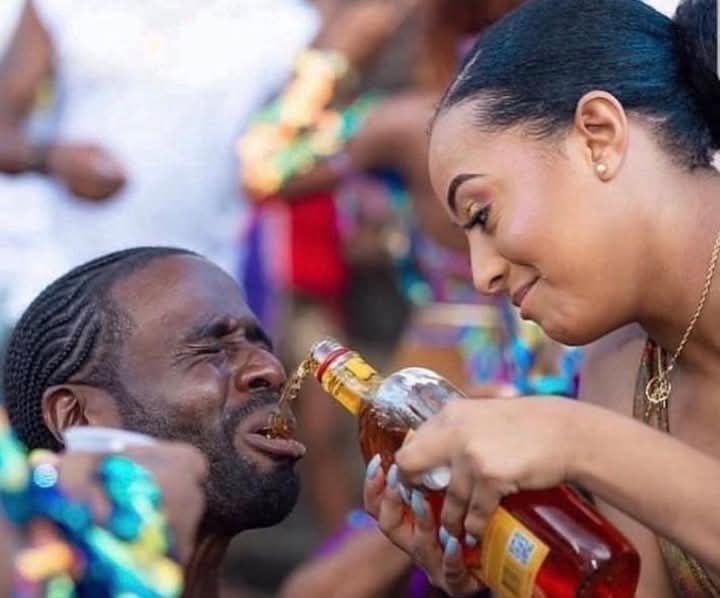
Ignorance is one of the most expensive disabilities a man can carry through life. It does not announce itself. It does not wear a uniform. It does not prevent a man from speaking confidently, dressing well, attending church, graduating from university or fathering children. It can sit in a boardroom, occupy a government office, wear a necktie, drive a German machine and still be completely ignorant of the forces controlling its owner’s destiny.
An ignorant man can work hard, sacrifice everything and still lose to a man who understands the game.
That is the tragedy.
Across Africa, men wake up before sunrise, squeeze into overcrowded matatus, endure traffic, tolerate abusive supervisors, work until their bodies ache and return home after dark. They repeat this routine for decades.
Yet some retire with no meaningful assets, no financial security, no ownership of the businesses they helped build and no clear explanation for why their years of sacrifice produced so little freedom.
They blame bad luck. They blame the economy. They blame politicians. They blame their employers.
Sometimes those forces really are responsible.
But there is another question they rarely dare to ask: How much of their suffering was made worse by what they did not know?
A man can spend forty years working and never understand the difference between earning money and building wealth. He can confuse a salary with financial security, a loan with prosperity, an expensive car with success and visible consumption with actual ownership. He can receive a pay rise and immediately increase his expenses until he is just as financially trapped as before.
He earns more, but owns little.
He spends more, but controls little.
He works more, but remains dependent.
And when the salary stops, the illusion collapses.
THE IGNORANCE THAT KEEPS A MAN POOR
Consider the man who borrows money to finance a lifestyle he cannot afford. He takes a digital loan to buy fashionable clothes, another to pay the first and another to survive the month. Interest accumulates. Penalties grow. His phone rings with collection calls. His peace disappears.
He has access to money, but does not understand the price of borrowing.
He has a smartphone, but does not understand the financial machinery operating through it.
He has a job, but does not understand how quickly a small debt can become a permanent drain on his income.
The lender understands the contract. The lender understands the fees. The lender understands the consequences of default. The borrower discovers those consequences after signing.
Who entered the transaction with greater power?
Or consider the man who spends years saving for a plot of land. He finds an attractive deal, trusts a persuasive seller, pays a deposit and celebrates his investment. Months later, he discovers a dispute over ownership, a fraudulent title or a seller who had no legal right to transfer the property.
His savings are gone. His plans are shattered. His family is asking questions he cannot answer.
The seller understood something he did not.
That difference in knowledge became a difference in power.
Another man joins a business partnership because the other party is his friend, cousin or fellow church member. There is no clear agreement about ownership, responsibilities, decision-making or profit-sharing. In the beginning, everybody is enthusiastic. When money arrives, memories become selective. Contributions are disputed. Profits disappear into somebody else’s account. The friendship ends in accusations.
The man thought trust was enough.
The world introduced him to conflicting interests.
And ignorance had left him unprepared for the collision.
There are men who lose their life savings not because they are lazy, but because they enter financial battles without understanding the battlefield.
That is not a minor inconvenience. It is a devastating weakness.
THE IGNORANCE THAT MAKES A MAN AN EMPLOYEE OF HIS OWN POVERTY
A man may spend years complaining that his employer underpays him while knowing almost nothing about the value of his skills in the market. He does not know what comparable workers earn. He does not understand his contract. He has never examined the economics of his industry. He cannot explain why his contribution deserves a particular salary.
He knows he is tired.
He knows he is under pressure.
He knows his employer is making money.
But he does not understand the commercial arrangement that determines his share.
His employer may understand costs, margins, bargaining power, labour supply and the consequences of replacing him. The employee may understand only that his rent is due on the fifth.
When the employer says, “If you are not happy, there are many people looking for jobs,” the man feels the threat because he knows his vulnerability.
He has a family to feed. School fees are approaching. His landlord has sent reminders. His mother needs medication. He cannot afford to lose his income.
His dependence becomes leverage in somebody else’s hands.
This is how ignorance compounds poverty: not merely by depriving a man of facts, but by leaving him unable to understand the arrangements through which his time, labour and choices acquire value.
And the tragedy is that a man can spend his entire working life inside an economic system without ever understanding how that system works.
He can build somebody else’s empire while remaining a stranger to the principles of ownership, negotiation and capital.
He can train new employees, solve expensive problems, manage difficult clients and keep an entire operation running—yet remain financially fragile because he has never understood the difference between being indispensable to an employer and having bargaining power in the market.
He may be excellent at his job and ignorant of the business behind it.
Those are not the same thing.
THE IGNORANCE THAT TURNS A MAN INTO AN EASY TARGET
An ignorant man is vulnerable wherever another person possesses information he lacks.
The property agent knows that the house advertised online does not exist, but the desperate tenant does not know it. The tenant sends a viewing fee, transport money or a deposit, only to discover that the pictures were stolen and the supposed landlord cannot be found.
The fraudulent recruiter knows there is no job abroad, but the unemployed graduate does not know it. He borrows from relatives, sells property or empties his savings to pay processing fees. The promised opportunity dissolves. The debt remains.
The dishonest trader knows the product is defective, but the buyer does not know what to inspect.
The predatory lender understands the penalties, but the borrower sees only the cash arriving in his account.
The corrupt official knows which procedures are genuine and which payments are unlawful, but the desperate citizen does not know where the legitimate process ends and extortion begins.
The manipulator understands a man’s insecurity, vanity, desperation or hunger for recognition. He knows which words will make him feel important, which promises will excite him, and which threats will silence him.
The ignorant man sees a transaction, an opportunity, a favour or a friendship.
Sometimes, what he is actually facing is an exploitation strategy.
And by the time he recognises the difference, the damage has already been done.
This is why ignorance is more than the absence of education. A man can hold a university degree and still be ignorant about contracts, personal finance, human behaviour, business, law, health, politics or the industry in which he works.
He can quote academic theories while being unable to recognise a scam.
He can speak excellent English while being unable to negotiate a fair deal.
He can possess professional qualifications while making disastrous decisions about debt.
He can read the Bible from Genesis to Revelation while remaining unable to distinguish a sincere religious leader from a fraudster using spiritual authority to extract money and obedience.
A certificate proves that a man passed a particular assessment. It does not prove that he understands the world.
THE IGNORANCE THAT MAKES A MAN EASY TO RULE
A man who does not understand power will often mistake authority for competence, confidence for truth, wealth for wisdom and popularity for integrity.
He may believe every politician who promises development, every employer who promises future promotion, every religious leader who claims divine authority and every influential person who tells him that obedience is the price of belonging.
He may defend leaders who exploit him because he has confused loyalty with submission.
He may repeat political slogans without understanding public budgets, taxation, procurement, debt or the economic consequences of government decisions.
He may vote based on tribe, personality or temporary handouts, then spend years suffering the consequences of policies he never examined.
He may celebrate a leader’s wealth without asking how that wealth was acquired, who paid the cost, or whether the leader’s success has improved the lives of the people who keep applauding him.
He may be told that poverty is a sign of humility, that questioning authority is disrespectful, that obedience is always virtuous, or that suffering without protest is proof of good character.
And he may accept these ideas without examining who benefits from his acceptance.
This is the danger of an unexamined mind: a man can become an enthusiastic defender of the very arrangements that keep him powerless.
He may police other people’s questions more aggressively than he investigates the people giving the orders.
He may condemn the man who challenges an exploitative system while praising the powerful person who benefits from it.
He may be so desperate to belong that he sacrifices the independence of his own judgment.
At that point, ignorance is no longer merely a personal disadvantage. It becomes a force that can reproduce itself through families, institutions and generations.
THE IGNORANCE THAT DESTROYS A MAN’S RELATIONSHIPS
Ignorance also walks into the home.
A man may believe that providing money is the entirety of fatherhood. He pays school fees, buys food and assumes that his children will somehow emerge as responsible adults. He knows little about their emotional development, the pressures they face, the people influencing them or the skills they will need in adulthood.
Years pass. His children grow up physically, but he is astonished when they struggle with decisions, relationships, money or responsibility.
He was present in the house.
But presence alone did not guarantee understanding.
Another man believes that jealousy is proof of love. He interprets every disagreement as disrespect, every independent decision as rebellion and every boundary as a challenge to his authority. His insecurity becomes suspicion. His suspicion becomes conflict. Eventually, the relationship he wanted to protect becomes a battlefield.
He does not understand the difference between love and possession.
He does not understand that authority cannot manufacture genuine affection.
He does not understand that being feared is not the same as being respected.
A third man cannot communicate without shouting. He cannot admit an error without feeling diminished. He cannot receive criticism without becoming defensive. He turns every disagreement into a contest of pride, then wonders why people avoid him, conceal information from him or refuse to cooperate with him.
He may call himself a strong man.
But if his emotions repeatedly dictate his decisions, how much control does he actually possess?
A man can lose a marriage through ignorance. He can damage his relationship with his children through ignorance. He can destroy friendships, partnerships and professional opportunities because he does not understand human behaviour.
And the most dangerous part is that he may never identify ignorance as the cause. He simply concludes that everybody else is difficult, disloyal, disrespectful or ungrateful.
His own blind spots remain invisible to him.
THE IGNORANCE THAT MAKES A MAN A STRANGER TO HIS OWN BODY
Some men do not understand the basic requirements of the bodies they expect to carry them through decades of hard work.
They neglect sleep, eat poorly, ignore persistent symptoms, misuse substances, abandon physical activity and treat exhaustion as an inevitable feature of masculinity.
They may dismiss preventive healthcare as unnecessary until an illness becomes impossible to ignore.
They may spend money on products promising miraculous transformations while neglecting the ordinary foundations of health.
They may confuse reckless endurance with strength.
A man who ignores his health can sacrifice years of productive life without understanding the price he is paying. His family may eventually bear the financial and emotional consequences of problems that could have been addressed earlier.
The body does not negotiate with ignorance.
Biology does not care how ambitious a man is, how many people depend on him or how passionately he speaks about his future.
Reality collects its debts.
THE MOST DANGEROUS IGNORANCE IS THE IGNORANCE A MAN CANNOT RECOGNISE
The man who knows nothing about a subject but recognises his ignorance has at least identified a gap.
The more dangerous man is the one who knows little, understands even less, and possesses enough confidence to mistake his assumptions for facts.
He does not investigate because he believes he already knows.
He does not listen because he assumes he is already right.
He does not reconsider because changing his mind feels like humiliation.
He does not seek evidence because evidence might threaten the identity he has constructed around his opinions.
He can spend forty years repeating a mistake and call it experience.
He can inherit a belief from his father, pass it to his son and mistake the repetition of an idea for proof of its truth.
He can reject information because it comes from somebody he dislikes, then accept a falsehood because it comes from somebody he admires.
His pride becomes the guard standing at the entrance to his own mind.
And the guard admits almost nothing.
Such a man is not merely uninformed. He is imprisoned inside his own certainty.
The world changes. Industries transform. Technology advances. Economic conditions shift. Laws evolve. Human behaviour becomes more complex. Opportunities emerge and disappear.
But he continues operating from an outdated map, insisting that reality must be wrong because it no longer resembles what he remembers.
Then he wonders why younger competitors overtake him, why his business fails, why his skills become irrelevant, why his children face a different world from the one he prepared them for.
He mistakes familiarity for understanding.
He mistakes age for wisdom.
He mistakes conviction for evidence.
And time exposes the difference.
IGNORANCE IS NOT INNOCENT
We often speak of ignorance as though it were harmless—as though not knowing were merely an empty space in the mind.
But ignorance can have consequences measured in lost savings, broken families, wasted years, preventable suffering and opportunities that never return.
It can leave a man signing a contract he does not understand, trusting a person he has not evaluated, borrowing money whose cost he has not calculated, supporting a leader whose interests conflict with his own, or spending his best years pursuing a goal he has never examined.
It can turn his labour into somebody else’s wealth.
His trust into somebody else’s opportunity.
His loyalty into somebody else’s leverage.
His fear into somebody else’s control.
And his children can inherit the consequences.
A father who does not understand money may pass financial confusion to his children. A father who cannot distinguish evidence from propaganda may pass political confusion to them. A father who cannot regulate his emotions may pass destructive patterns into his family. A father who does not understand the world may prepare his children for circumstances that no longer exist.
This is how ignorance outlives the ignorant man.
It survives in habits, assumptions, family decisions and institutions. It becomes normal. It becomes tradition. It becomes the familiar explanation for why life must remain difficult.
Then a new generation is born into the same limitations and is told that this is simply how life works.
That is the generational cruelty of ignorance: it does not always destroy a man in one dramatic event. Sometimes it quietly consumes his choices until he mistakes a restricted life for his natural destiny.
And no man should be comfortable with that possibility.
Not when his children are watching.
Not when his years are passing.
Not when the consequences of a decision can extend far beyond his own lifetime.
A man does not need to know everything. No human being does. But ignorance becomes a profound liability when it concerns the very things determining his freedom, livelihood, health, relationships and future—and when he remains blind to the extent of what he does not know.
The tragedy is not that a man begins life without all the answers.
The tragedy is that he can live, labour, suffer, father children and grow old without ever confronting how much he does not understand.
A man who does not understand the forces shaping his life can spend his entire life being shaped by forces he cannot see.
And when the final account is taken, he may discover that the greatest thief of his potential was not a single enemy, a single government, a single employer or a single betrayal.
It was the vast territory of things he never understood—and the price he paid for living as though he did.
2. POOR HEALTH: THE BODY THAT BETRAYS ITS OWNER
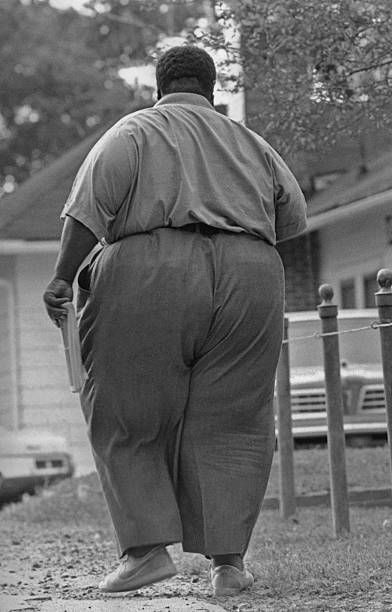
A man may possess ambition, intelligence, courage and enormous dreams. But if his body cannot sustain the demands of his ambitions, he will discover a brutal truth: you cannot exercise power consistently through a body that is constantly failing you.
You may have the mind of a general and the physical capacity of a man who can barely get through the day. You may have plans to build an empire, raise a family, compete in business and become a formidable force in your industry. But your body must carry you through every meeting, every difficult decision, every setback, every long working day and every battle that life puts in front of you.
Your body is not an accessory to your ambitions.
It is the machinery through which you execute them.
When that machinery breaks down, everything becomes more expensive.
Your time becomes more expensive. Your money becomes more expensive. Your responsibilities become harder to fulfil. Your independence begins to shrink.
And the world does not suspend its demands simply because you are unwell.
THE MAN WHO WORKS TO PAY FOR HIS OWN SUFFERING
Imagine a man who spends his best years working to escape poverty. He wakes up early, works long hours and sacrifices his comfort to build a better future for his family.
Then his health begins to deteriorate.
First comes the persistent pain. Then the hospital visits. Then the laboratory tests, consultations, medication and follow-up appointments. Some months, he must choose between paying a medical bill and meeting another family obligation.
His savings begin to disappear.
Money that could have financed a business, purchased equipment, paid school fees, improved his home or acquired an income-producing asset is redirected towards managing illness.
He works to earn money. He spends the money treating his body. He returns to work because the bills are waiting. The work exhausts him further, and his health continues to demand attention.
For some men, the cycle becomes financially devastating.
A single serious illness can wipe out savings accumulated over years. A chronic condition can create recurring expenses. A prolonged period away from work can destroy a business, interrupt a career or force a family to depend on relatives.
The tragedy is not that sick people lack courage. It is that illness can impose costs that courage alone cannot pay.
Poor health can turn a man’s income into a maintenance budget for his own suffering.
And while he is fighting to remain functional, the opportunities he hoped to pursue do not necessarily wait.
A competitor launches the business. Another candidate gets the promotion. A contract goes to somebody else. A promising investment window closes.
His ambitions remain alive, but his available time, money and energy have been consumed by demands he cannot simply ignore.
THE MAN WHO CANNOT SUSTAIN THE WORK REQUIRED TO CHANGE HIS LIFE
Building anything substantial demands sustained effort.
A business owner may need to oversee operations, resolve disputes, travel between locations, manage employees, meet clients and make decisions under pressure. A farmer may need to work through demanding seasons. A tradesman may need hours of physical labour. A professional may need sustained concentration to solve complicated problems.
Now imagine performing these tasks while chronically exhausted, struggling with untreated illness or recovering from repeated periods of poor health.
The day begins with a deficit.
By midmorning, concentration is fading. By afternoon, simple tasks feel difficult. The man postpones important work because he has no energy left. He becomes less productive, misses opportunities and struggles to maintain the consistency his goals demand.
His competitor may not be more intelligent. His competitor may not have better ideas.
His competitor may simply be able to execute consistently while he is repeatedly incapacitated.
This is one of the cruelest ways poor health undermines power: it can separate what a man is capable of imagining from what he is physically able to accomplish.
He has plans, but little stamina to execute them.
He has responsibilities, but limited capacity to meet them.
He has opportunities, but cannot always deliver when they arrive.
Over time, the consequences can accumulate into lost income, reduced professional standing and dependence on others.
A man cannot guarantee success by being healthy. But when his health is persistently compromised, even ordinary tasks can demand disproportionate effort.
Ambition cannot compensate indefinitely for a body that lacks the capacity to execute it.
THE MAN WHO MUST PAY OTHERS TO DO WHAT HE ONCE COULD DO HIMSELF
Physical capability has practical economic value.
A man who can carry his own luggage, maintain his property, perform routine physical tasks and work with his hands possesses options that may be unavailable to someone whose mobility or strength is severely limited.
When illness, injury or physical deterioration takes those abilities away, everyday life can become more expensive.
He may need to pay someone to carry things, clean, maintain his home, perform repairs, accompany him to appointments or assist with basic activities. He may have to stop doing work that once earned him money. He may need specialized equipment, transport or long-term support.
There is nothing shameful about disability, illness or needing assistance. Every human being can become vulnerable, and dependence is not a moral failure.
But we must recognise the practical reality: when a man’s physical capacity declines, his dependence on other people and systems may increase.
Consider a self-employed tradesman whose income depends on physical work. An injury prevents him from lifting equipment or remaining on his feet for long periods. His skills have not disappeared, but his ability to sell those skills has been restricted.
The rent remains due.
The children still need school fees.
The market does not automatically compensate him for the income he can no longer earn.
Or consider an older man whose unmanaged health problems leave him unable to perform activities he once handled independently. His adult children begin covering expenses and arranging assistance. His choices become constrained by the availability, finances and goodwill of others.
The loss is not merely physical.
It can affect privacy, independence, confidence and the ability to determine how one’s own life is organised.
The body that once expanded his options can become a source of limitations.
THE MAN WHO CANNOT DEFEND HIS OWN INTERESTS PHYSICALLY
Physical strength is not the foundation of every form of power. Intelligence, law, alliances, negotiation and institutions matter enormously. A physically strong man can be defeated by a more strategic opponent, and a physically disabled man can be an extraordinarily effective leader.
But physical capability still matters in particular circumstances.
A man who lacks the strength, mobility or stamina required for a demanding physical task may be unable to perform it independently. Someone who cannot run may struggle to escape a physical threat. Someone whose mobility is severely limited may face greater difficulty navigating dangerous environments without assistance.
And a man whose body is weakened by preventable neglect may find himself less prepared for physical demands than he could have been.
This is not an argument that every man must be a fighter or settle disputes with violence. Physical confrontation can cause permanent injury, death, criminal consequences and devastating harm to families.
The point is simpler: physical helplessness can narrow a man’s options when physical capability is genuinely required.
Strength, mobility, balance and stamina are practical assets. Their value becomes painfully obvious when they are absent.
A man who cannot lift, walk, climb, carry or move without significant difficulty may encounter barriers that a physically capable person does not. Even when he possesses the money to hire help, he may still lose independence, time and freedom of movement.
And when a man is already financially insecure, paying others to compensate for limitations he might otherwise have prevented or reduced can place another burden on his household.
The objective is not to make every man dangerous.
It is to recognise that a body with greater functional capacity generally offers its owner more choices.
THE MAN WHO ENTERS A NEGOTIATION ALREADY DEFEATED BY HIS OWN BODY
Negotiation is not simply an exchange of words. It demands attention, emotional regulation, judgment and the ability to evaluate alternatives.
Now picture a man sitting across from an employer, landlord, creditor or business partner while dealing with severe pain, exhaustion or the symptoms of an unmanaged medical condition.
He is struggling to concentrate. He is irritable. He wants the meeting to end because he feels physically miserable. He cannot properly examine the proposal, challenge questionable figures or patiently consider the consequences.
The other party may have no idea what he is experiencing.
The contract is still on the table.
The deadline is still approaching.
The other party may still be willing to walk away.
His body has introduced another disadvantage into an already difficult negotiation.
Consider a tenant negotiating a payment arrangement while suffering from severe pain. A business owner making an important decision after several nights without adequate sleep. An employee attempting to resolve a workplace dispute while exhausted and emotionally overwhelmed.
Poor health does not automatically make any of these people lose. Nor does it mean that someone with a medical condition cannot negotiate effectively.
But pain, fatigue and some illnesses can impair concentration, judgment or emotional regulation. The consequences can be significant when the decision involves money, employment, housing or a business.
A man who is fighting his own body has less room to focus on the battle in front of him.
And when the stakes are high, that lost capacity matters.
THE MAN WHOSE SEXUAL HEALTH BECOMES A SOURCE OF FEAR AND HUMILIATION
There is another dimension of men’s health that many men find difficult to discuss honestly: sexual function.
For some men, erectile difficulties become a source of anxiety, shame and fear. A man may worry about disappointing his partner. He may begin avoiding intimacy because he fears another unsuccessful encounter. He may interpret a physical symptom as proof that he is no longer desirable, capable or masculine.
The anxiety can then intensify the problem.
A man who once approached intimacy with confidence may begin approaching it as an examination he is terrified of failing.
He becomes preoccupied with his performance instead of being present with his partner. He may withdraw emotionally, become defensive or avoid conversations that could help the couple understand what is happening.
The relationship will suffer— but because fear, silence and unresolved difficulties can damage intimacy.
For some couples, the issue becomes a source of misunderstanding. One partner may interpret withdrawal as rejection. The other may experience every question as humiliation. Resentment grows where honest communication has disappeared.
And the man may suffer privately, convinced that he must conceal the problem to preserve his dignity.
But erectile dysfunction is not proof that a man is weak, and it does not establish that his partner has lost respect for him. It can have psychological, vascular, hormonal, neurological, medication-related or other medical causes. It can also be a sign of an underlying health problem that deserves attention.
Nor is sustaining an erection for thirty minutes a universal test of masculinity or sexual adequacy. Sexual satisfaction depends on far more than duration, and partners differ in their needs and preferences.
The deeper point is that sexual health can affect confidence, intimacy and quality of life—and when a man is suffering, pretending that nothing is wrong can compound the suffering.
A man should not have to measure his worth by a sexual performance. But neither should he be forced by shame to suffer silently when a health problem is affecting his life.
His body matters.
His intimate relationships matter.
His confidence matters.
And his health deserves more than ridicule.
THE MAN WHO MISTAKES EXHAUSTION FOR MASCULINITY
Some men have been conditioned to treat bodily neglect as proof of toughness.
They sleep too little and boast about surviving on four hours. They ignore symptoms because they do not want to appear weak. They eat poorly, rarely exercise, overuse alcohol or other substances, and postpone medical attention until the problem becomes impossible to ignore.
They sacrifice recovery in the name of productivity, then wonder why their performance deteriorates.
They believe that being a man means enduring anything.
But endurance is not the same as sound judgment.
A vehicle that is driven relentlessly without maintenance does not become superior because its owner refuses to acknowledge its condition. It becomes more vulnerable to breakdown.
The human body is more complex than a machine, but the principle remains: chronic neglect can have consequences.
Insufficient sleep can impair attention and reaction time. Inadequate nutrition can compromise health and physical performance. Physical inactivity increases the risk of several chronic conditions. Persistent stress can affect sleep, mood and general well-being. Untreated disease can progressively restrict a person’s abilities.
None of these outcomes is guaranteed in every individual, and illness is not always preventable. Genetics, environment, poverty, working conditions and access to healthcare all influence health.
But that is precisely why health must be treated as a serious matter rather than an afterthought.
A man can be brave and still be ill.
He can be hardworking and still be physically depleted.
He can be ambitious and still be unable to sustain his ambitions.
Suffering is not proof of strength. Sometimes suffering is evidence of a problem that is consuming the very capacity a man needs to live well.
WHEN THE FATHER’S HEALTH BECOMES THE FAMILY’S CRISIS
Poor health rarely affects only the person experiencing it.
When a father becomes seriously ill, his family may lose income while gaining new expenses. A spouse may have to reduce working hours to provide care. Children may take on responsibilities beyond their years. School fees may be delayed. Savings may disappear. Plans for a home, a business or further education may be abandoned.
If the family has no financial cushion, the consequences can spread rapidly.
One person’s illness becomes a household emergency.
A household emergency becomes debt.
Debt delays investment.
Delayed investment narrows future opportunities.
The children may grow up with fewer resources, not because their father did not love them, but because illness consumed resources the family could not afford to lose.
In other families, a parent’s physical limitations mean that children miss out on ordinary experiences: being taken to school, playing together, travelling, participating in activities or receiving the practical support that an energetic, healthy parent might have provided.
No child should be made to feel ashamed of a parent’s illness. Sick and disabled parents can love, lead and nurture their families profoundly.
The issue is the burden that poor health can impose when combined with inadequate support, limited resources and preventable neglect.
A man’s health is personal, but its consequences can be generational.
His body is not merely carrying his own ambitions.
It may also be carrying the hopes and security of people who depend on him.
POOR HEALTH CAN STEAL THE YEARS IN WHICH A MAN COULD HAVE BUILT HIS FUTURE
Time is one of the few resources a man cannot replenish.
A year consumed by illness cannot simply be added back to the calendar. Money spent on treatment may be earned again, but the opportunities available at a particular age, the time spent raising young children and the years of productive work cannot always be recovered.
A man who spends long periods incapacitated may miss promotions, lose customers, withdraw from education or abandon a business. Recovery may take months. Some conditions cause lasting limitations. Others require lifelong management.
For the man living close to the financial edge, even a temporary setback can have lasting effects.
He may recover physically but return to a depleted bank account, unpaid bills, lost customers and a career that has moved on without him.
He must then rebuild his financial position while also managing his health.
The challenge is not merely to become well again.
It is to recover the ground lost while he was unwell.
And some men never fully recover that ground.
3. LOW TESTOSTERONE AND DISRUPTED BIOLOGICAL HEALTH: WHEN THE FIRE BEGINS TO DIE

A man can lose his power long before he loses his job, his money, his wife or his physical strength.
Sometimes, the decline begins inside his own body.
His energy is no longer what it used to be. His sexual desire diminishes. His recovery from physical exertion becomes slower. His motivation feels different. His mood changes. He struggles to maintain the intensity with which he once approached life.
He wakes up tired. He moves through the day tired. He returns home tired. Even the activities that once excited him begin to feel like obligations.
He has ambitions, but the fire that once drove him towards them seems to be burning lower.
He looks at his younger self and wonders what happened.
For some men, these experiences are associated with low testosterone or other hormonal disturbances. For others, the causes include inadequate sleep, depression, chronic stress, poor nutrition, obesity, medication effects, chronic illness or other medical conditions. Several causes can coexist.
But the experience is real: a man can feel that his vitality has declined while struggling to understand why.
And when he cannot identify what is happening, he may begin to interpret a biological problem as a personal failure.
He calls himself lazy.
He thinks he has become weak.
He wonders whether he is losing his masculinity.
Meanwhile, the underlying problem remains unexplored.
A man cannot make sound judgments about his life if he does not understand the condition of the body and brain through which he experiences it.
THE TESTOSTERONE QUESTION
Testosterone is an important hormone in male physiology. It contributes to the development and maintenance of male reproductive tissues, supports sperm production in coordination with other hormones, helps maintain muscle and bone, and influences sexual desire. Abnormally low testosterone can also be associated with fatigue, reduced libido, erectile difficulties, depressed mood and loss of muscle mass.
The effects vary between individuals. Not every man with low testosterone experiences the same symptoms, and these symptoms can arise from many other conditions.
Nevertheless, testosterone deserves serious attention in any discussion of male biological health.
Why?
Because a man is not merely a collection of opinions, ambitions and motivational slogans. He is a biological organism. His physical condition influences what he can do, how he feels and how he experiences daily life.
A man who is persistently exhausted, losing muscle, experiencing a marked decline in sexual desire and struggling with unexplained changes in mood may be facing a genuine health problem.
Mocking him will not solve it.
Telling him to become more masculine will not diagnose it.
And assuming that every problem is psychological may cause a physical contributor to be overlooked.
The point is not that every man must have unusually high testosterone.
The point is that a man should not remain ignorant of a potentially significant hormonal problem while its consequences accumulate.
Biological health is not a substitute for character. But character cannot make biology irrelevant.
THE MAN WHO HAS LOST HIS DRIVE
Consider two men with similar skills, responsibilities and ambitions.
Both want to build businesses. Both have families to support. Both understand that success will demand years of difficult work.
One wakes up reasonably rested and has the energy to engage with the day. He can concentrate, train, meet clients, recover from setbacks and return to work after a demanding week.
The other is struggling with persistent fatigue, poor sleep and a medical problem that has not been identified. Every task demands more effort. He postpones meetings. He abandons his training routine. His concentration fluctuates. He struggles to maintain the consistency his ambitions require.
It would be foolish to conclude that the first man must be more masculine or that testosterone explains the entire difference. Human performance is influenced by numerous biological, psychological, social and economic factors.
But it would be equally foolish to pretend that the second man’s physical condition is irrelevant.
When energy, sleep, mood and physical function deteriorate, the pursuit of demanding goals can become harder.
A business does not stop demanding decisions because its founder is exhausted.
A family does not stop needing support because a father feels unwell.
A competitor does not automatically surrender an opportunity because another man is struggling.
The consequences can be severe even when nobody is at fault.
A man may possess the knowledge to act but lack the physical and psychological capacity he previously relied on. His plans remain intact while his execution deteriorates.
This is one of the cruelest experiences of declining vitality: knowing what needs to be done while struggling to bring yourself to do it.
THE MAN WHO CAN NO LONGER RECOGNISE HIS OWN SEXUALITY
For many men, sexual desire is closely connected to their sense of vitality, intimacy and confidence.
When libido declines unexpectedly, the change can affect more than sex itself.
A man may begin avoiding his partner because he does not want to explain why he is no longer interested. He may fear that she will interpret his reduced desire as rejection, infidelity or a loss of attraction.
He may feel embarrassed when he cannot respond sexually as he once did. He may become preoccupied with whether his body will perform when intimacy begins.
Some men respond by withdrawing. Others become defensive. Some seek unregulated products or substances promising instant restoration of sexual performance.
What began as a possible health problem can become a cycle of anxiety, secrecy and relationship strain.
And because many men have been taught that masculinity means permanent sexual readiness, they may find it difficult to admit that something has changed.
But a man’s libido is not a measure of his moral worth, and an erection is not a certificate of manhood.
The problem is not that a man’s body changes. The problem is when shame prevents him from understanding what is happening.
Persistently low sexual desire can have many causes, including low testosterone, depression, relationship difficulties, chronic illness, medication effects and inadequate sleep. Erectile dysfunction also has multiple possible causes, including vascular disease, diabetes, psychological factors and hormonal disorders.
The symptoms deserve investigation rather than ridicule or automatic assumptions.
A man who experiences persistent changes in sexual function may be confronting a health issue with implications beyond the bedroom.
His sexual health can be part of his broader physical health.
And ignoring it does not make him stronger.
THE MAN WHO WANTS TO BUILD MUSCLE BUT CANNOT RECOVER
Physical strength is an asset. Muscle supports movement and functional capacity, while resistance training can improve strength, bone health and aspects of metabolic health.
Testosterone plays a role in maintaining muscle mass, but it is not the only factor determining strength. Training, nutrition, sleep, genetics, age, illness and many other variables matter.
A man who experiences unexplained loss of muscle, reduced strength or poor recovery should not automatically blame testosterone. But neither should a possible hormonal disorder be dismissed when other signs are present.
Imagine a man who trains consistently, eats adequately and tries to improve his strength, yet experiences persistent fatigue, declining performance and a loss of physical capacity. He may begin to feel that his efforts are pointless.
His confidence suffers. His training becomes inconsistent. He abandons activities that once gave him satisfaction.
If an underlying medical condition is responsible, motivational slogans will not address it.
A man cannot bully every biological problem into submission.
He may be disciplined, determined and willing to work hard, yet still need an accurate explanation for what is happening to his body.
This matters particularly for men who earn their living through physical labour. When their strength and endurance decline, the consequences can extend directly into their income.
A worker who can no longer sustain his previous workload may lose earnings. A tradesman may find certain jobs harder to perform. A self-employed man may have to turn down contracts that demand physical effort he cannot reliably deliver.
The decline in capacity can become a decline in income.
The decline in income can become a decline in independence.
And the decline in independence can affect the entire household.
THE MAN WHOSE BODY IS CONSTANTLY FIGHTING HIM
Testosterone does not operate in isolation. Male biological health involves an interconnected system of hormones, organs, metabolism, sleep, nutrition and stress responses.
A man may be dealing with obesity, diabetes, cardiovascular disease, sleep apnoea, chronic stress or another condition that affects his energy, sexual function and overall well-being. In some cases, these conditions can also influence testosterone levels.
The consequences can reinforce one another.
Poor sleep leaves him exhausted. Exhaustion makes exercise harder. Reduced activity may worsen metabolic health. Worsening health may affect sleep, sexual function and mood. Financial pressure makes it harder to prioritise care, and the cycle continues.
The man may blame himself for lacking discipline without recognising the biological and environmental factors working against him.
Or he may assume that a single supplement, hormone booster or dramatic lifestyle intervention will solve everything.
Neither assumption is reliable.
The human body is not a machine with one broken switch. A symptom may have several contributing causes, and the same symptom can mean different things in different people.
This complexity does not make biological health less important.
It makes understanding it more important.
THE DANGER OF CONFUSING MASCULINITY WITH A LABORATORY NUMBER
There is a temptation to reduce male power to testosterone.
High testosterone, therefore, means a powerful man. Low testosterone means a weak man. More testosterone means more courage, more intelligence, more dominance and more success.
That is an attractive story because it offers a single explanation for complicated human outcomes.
But it is not an accurate account of human biology.
Testosterone is not a courage meter. It does not guarantee discipline, sound judgment, business competence, leadership or emotional control. Men with normal testosterone levels can be timid, reckless, intelligent, foolish, generous or cruel. Men with medically low testosterone can still be exceptional fathers, leaders, athletes, thinkers and builders.
A hormone does not determine a man’s entire character.
Nor does the pursuit of higher testosterone justify using anabolic steroids or unprescribed hormones. Such substances can suppress natural testosterone production, impair fertility and cause other serious health complications. Testosterone treatment is appropriate for some men with properly diagnosed conditions, but it is not a universal performance enhancer or a substitute for identifying the underlying problem.
The objective is not to manufacture an artificially aggressive man.
It is to understand the biological conditions that support health, physical function and quality of life.
A man who is obsessed with a laboratory number while ignoring his sleep, cardiovascular health, relationships, judgment and responsibilities may be missing the larger picture.
The goal is not the highest testosterone number. The goal is a healthy, functioning man whose biology supports the life he wants to lead.
THE BIOLOGICAL PRICE OF MODERN LIFE
Many men live under conditions that place sustained demands on their bodies.
Long working hours. Financial anxiety. Inadequate sleep. Poor-quality diets. Little physical activity. Environmental exposures. Long commutes. Limited access to healthcare. Family responsibilities that leave little room for recovery.
These pressures are not evenly distributed. A wealthy man with flexible working hours, nutritious food, private healthcare and time to exercise has options unavailable to a man working long shifts merely to cover rent and food.
It is therefore simplistic to tell every man that declining health is simply a consequence of personal weakness.
Some men face structural barriers that make healthy living considerably harder.
But those realities make the subject more urgent, not less.
A man whose circumstances already demand enormous physical and mental effort has a great deal at stake when his health deteriorates.
He cannot assume that his body will absorb every burden indefinitely.
He cannot assume that years of sleep deprivation will have no consequences.
He cannot assume that persistent fatigue is always laziness, that sexual dysfunction is always psychological, or that declining physical capacity is an inevitable part of being a man.
And he cannot afford to treat every warning sign as an inconvenience to be ignored.
4. LACK OF STRONG DARK TRIAD TRAITS: THE PSYCHOLOGICAL DISARMAMENT OF THE AFRICAN MAN

There is a dangerous kind of man who spends his entire life trying to be good in the eyes of other people.
He wants to be liked by his friends, respected by his colleagues, praised by his relatives, approved by his community and loved by everybody he encounters. He fears offending people. He avoids difficult conversations. He struggles to say no. He apologises when he has done nothing wrong. He sacrifices his interests to maintain relationships with people who would sacrifice nothing for him.
He is terrified of being called proud, selfish, arrogant, difficult or unkind.
So he becomes accommodating.
He gives people the benefit of the doubt even after they have demonstrated bad intentions. He keeps promises to people who repeatedly break theirs. He forgives without establishing boundaries. He confuses loyalty with lifelong obligation. He tolerates disrespect because he fears the consequences of confrontation.
When somebody exploits him, he asks what he did wrong.
When somebody takes advantage of his generosity, he offers another opportunity.
When somebody humiliates him, he searches for an explanation that will preserve the relationship.
And when somebody finally takes everything he can offer, the man is left with a painful discovery:
Being a good man does not guarantee that other people will treat you well.
The world contains generous people, honest people and people who genuinely want others to succeed. It also contains people who compete ruthlessly, manipulate situations, exploit weaknesses and pursue their interests without feeling obliged to protect yours.
A man who understands only the first category of human behaviour is dangerously unprepared for the second.
He may possess a good heart and still make terrible decisions about whom to trust.
He may be generous and still allow himself to be exploited.
He may be loyal and still remain trapped in relationships that are destroying him.
He may be peaceful and still become a convenient target for people who interpret his reluctance to resist as permission to continue.
This is where we must confront the psychological traits popularly grouped under the name the Dark Triad.
Psychologists use this term to describe three distinct but related personality traits: narcissism, Machiavellianism and psychopathy. These traits are associated, in different ways, with entitlement, strategic manipulation, callousness, reduced empathy and willingness to exploit others.
They are not identical traits and having them at high levels is not a universal formula for success. Their destructive expressions can damage relationships, reputations, careers and lives.
But the subject raises a difficult question worth examining:
What happens to a man who has so little self-belief, strategic awareness, emotional composure or willingness to protect his interests that he repeatedly surrenders to people who possess those capabilities in abundance?
To understand the problem, we must examine the three traits—and the useful capabilities that people sometimes confuse with them.
NARCISSISM
Imagine two men entering the same room.
Both possess relevant skills. Both have worked hard. Both have ideas that could improve the organisation. Both have something valuable to contribute.
The first man assumes that his contribution deserves consideration. He speaks clearly. He presents his ideas. He asks questions. He negotiates his compensation. He expects his work to be evaluated on its merits.
The second man enters already apologizing for his existence.
He worries that speaking confidently will make him look arrogant. He assumes that senior people know more than he does simply because they hold senior positions. He hesitates to ask for a promotion. He accepts poor compensation because he fears appearing demanding. He watches less competent people advocate for themselves while he waits for somebody to notice his sacrifice.
Years pass.
The first man may advance because he combines competence with visibility and self-advocacy. The second may remain overlooked, even when his work is excellent.
Their difference is not intelligence.
It may be their willingness to occupy space, claim credit for legitimate contributions and insist that their interests receive consideration.
This is where narcissism enters the discussion.
In its pathological or antagonistic expressions, narcissism involves excessive entitlement, grandiosity, a need for admiration and disregard for other people’s needs. Those characteristics are destructive. They are not the goal.
But a man who has absolutely no confidence in his own worth is vulnerable in a different way.
He believes that everybody else’s time matters more than his.
He treats his own ambitions as less legitimate than those of his relatives.
He feels guilty about asking for fair compensation while feeling no guilt about allowing himself to be underpaid.
He works behind the scenes while a more assertive colleague claims the credit.
He possesses the ability to lead but remain perpetually waiting for permission to lead.
And when somebody asks him to sacrifice again, he agrees because he has never fully accepted that his own future deserves protection.
Consider the African man whose extended family repeatedly demands financial assistance. He has rent to pay, children to educate and debts of his own. Yet every request becomes a moral emergency. He cannot distinguish between a genuine obligation and a demand that threatens his household’s stability.
He gives until his own family suffers.
He borrows to maintain the appearance of generosity.
He destroys his financial security because saying no makes him feel like a bad person.
The problem is not generosity. Generosity can be noble.
The problem is the inability to recognise that his own interests have legitimate value too.
A man who never places himself on his own list of people worth protecting will eventually discover that other people can make endless claims on his life.
He may spend his entire existence proving that he is useful to everyone while never building the life he wanted for himself.
The relevant capability is not pathological narcissism. It is healthy self-regard: the ability to believe that your time, ambitions, dignity and future matter without requiring everyone else to be inferior.
Without that foundation, a man can become an expert at serving other people’s interests and a stranger to his own.
MACHIAVELLIANISM
Imagine a businessman negotiating a partnership.
He believes that because the other man is friendly, the partnership will be fair. They shake hands. They exchange promises. They discuss the future. The businessman invests his savings and begins working.
But they never clearly define ownership, decision-making authority, responsibilities or how profits will be distributed.
When the business becomes profitable, the relationship changes.
His partner controls the accounts. His partner has access to the customers. His partner understands the agreements. His partner has prepared for disagreements the first man never imagined would occur.
Suddenly, the trusting businessman discovers that he has contributed enormous effort to an arrangement in which he possesses little control.
He thought a good relationship would protect him.
The other man understood that relationships operate within structures of incentives, information and power.
This is the territory associated with Machiavellianism: strategic calculation, manipulation, cynicism about other people’s motives and a willingness to use people as instruments for personal gain.
High Machiavellianism is not a virtue to pursue blindly. Deception and exploitation can destroy trust and create long-term costs.
But strategic thinking is essential to navigating a complicated world.
A man must be able to ask difficult questions.
Who benefits from this arrangement?
What does the other party want?
What happens if our interests diverge?
What information am I missing?
What am I giving up?
What happens if the promise is broken?
Who controls the money, the information, the relationship and the final decision?
A man who never asks these questions may repeatedly enter arrangements in which the other party has considered risks he has not even imagined.
Think of the employee who believes a verbal promise of promotion is equivalent to a binding commitment.
The entrepreneur who reveals every commercial plan to a competitor because he assumes everyone will play fairly.
The politician’s supporter who sacrifices his own resources for years while the politician builds a personal fortune.
The friend who lends money without clarifying repayment, then discovers that their shared history is being used to make him feel guilty for asking for it back.
The man who reveals his deepest insecurities to somebody who later uses them to control him.
In every case, the failure is not necessarily excessive kindness.
It is the absence of strategic awareness.
The man assumes that good intentions will protect him in situations where incentives, conflicting interests and unequal bargaining power matter.
He mistakes friendliness for reliability.
He mistakes promises for guarantees.
He mistakes trust for the absence of risk.
A man who refuses to study human behaviour will repeatedly be surprised by behaviour he could have anticipated.
Strategic intelligence does not require paranoia. It requires the ability to recognise that people have interests, that those interests sometimes conflict, and that a person’s words must be evaluated alongside their conduct and incentives.
The man who lacks this capacity can spend his life being outmanoeuvred by people who understand the game better than he does.
He may be honest, but honesty alone does not make him strategically competent.
He may be loyal, but loyalty alone does not make him difficult to exploit.
He may be intelligent in his profession, but that does not automatically make him intelligent about power.
And the consequences can be devastating.
PSYCHOPATHY
The word psychopathy is disturbing for good reason. In its clinical and research contexts, it is associated with characteristics such as callousness, reduced empathy, shallow emotional responses and in some cases, antisocial behavior.
It is not synonymous with courage, confidence or emotional stability.
Yet the word points towards a difficult question: what happens to a man who cannot tolerate the emotional discomfort that comes with pursuing his interests in a competitive world?
Consider an employee who is repeatedly humiliated by his supervisor.
He knows the treatment is unacceptable. He has documented examples. He has legitimate grounds to raise the matter. But the prospect of confrontation terrifies him.
What if his supervisor becomes angry?
What if his colleagues think he is difficult?
What if he loses his job?
He says nothing.
The mistreatment continues. His confidence erodes. His resentment grows. Eventually, he either collapses emotionally, leaves under pressure or explodes after years of accumulated frustration.
His inability to confront the problem has imposed a cost on him.
Or consider a man who cannot end a destructive relationship because he cannot bear the guilt of disappointing his partner. He stays despite repeated betrayals, broken promises and constant conflict.
He knows the relationship is harming him.
But the emotional discomfort of leaving feels worse than the familiar pain of remaining.
So he stays.
Or consider the businessman who knows that a customer is taking advantage of his generosity. The customer repeatedly delays payment, demands additional work and threatens to take the business elsewhere whenever the businessman insists on fair terms.
The businessman needs the revenue.
He fears losing the customer.
He continues accepting an arrangement that is steadily damaging his business.
In each case, the man may understand the problem perfectly well. What he lacks is the ability to tolerate the discomfort required to confront it.
He cannot tolerate somebody being angry with him.
He cannot tolerate being disliked.
He cannot tolerate uncertainty.
He cannot tolerate the possibility of failure.
He cannot tolerate the temporary pain of making a necessary decision.
And so he purchases short-term emotional relief at the price of long-term damage.
He chooses the discomfort he already knows over the discomfort that might set him free.
This is a profoundly costly pattern.
Business requires difficult decisions. Leadership requires accountability. Negotiation requires disagreement. Competition requires accepting that somebody may lose. Boundaries require disappointing people who have become accustomed to unrestricted access to you.
A man who cannot withstand these experiences may repeatedly surrender his interests to avoid the emotional cost of defending them.
He may call it peace.
He may call it patience.
He may call it being a good person.
But if the pattern leaves him chronically exploited, resentful and unable to make necessary decisions, the consequences deserve examination.
The useful capability is not callousness. It is emotional composure: the capacity to experience fear, guilt, anger or discomfort without automatically allowing those feelings to dictate your behaviour.
A man can care about another person’s feelings without making himself responsible for preventing every unpleasant emotion that person experiences.
He can feel fear and still act.
He can feel guilt and still say no.
He can experience rejection without concluding that his life is over.
He can lose an argument without losing his identity.
He can walk away from a bad deal without treating the departure as proof that he is a failure.
He can endure the temporary discomfort of defending a legitimate interest.
Without such capacity, the threat of emotional pain becomes a leash that other people can pull.
THE MAN WHO MUST BE LIKED BY EVERYBODY
Now consider the three patterns together.
A man has insufficient self-regard to believe his interests deserve protection.
He has insufficient strategic awareness to recognise when another person’s interests conflict with his own.
And he has insufficient emotional composure to confront the conflict once he recognises it.
What happens?
He underprices his labour.
He accepts bad agreements.
He lends money he cannot afford to lose.
He tolerates disrespect.
He avoids necessary confrontation.
He remains in destructive relationships.
He allows other people to define the boundaries of his life.
He repeatedly sacrifices his future to preserve somebody else’s approval.
And when the consequences arrive, he may console himself with the belief that he has been a good man.
But being good does not mean being endlessly available.
Being generous does not mean financing every demand.
Being humble does not mean pretending you have no value.
Being peaceful does not mean tolerating every form of mistreatment.
Being forgiving does not mean restoring trust without evidence of change.
Being loyal does not mean remaining loyal to somebody who has repeatedly demonstrated that your interests mean nothing to them.
The man who cannot distinguish between virtue and self-abandonment can be manipulated through the very qualities he considers his greatest strengths.
Tell him he is selfish, and he will sacrifice more.
Tell him he is proud, and he will shrink.
Tell him he is disloyal, and he will remain in a destructive arrangement.
Tell him that a real man never complains, and he will conceal his suffering.
Tell him that a good person always forgives, and he may abandon every boundary that would protect him from repeated exploitation.
His need to remain morally approved becomes a mechanism through which others influence his decisions.
This is the danger of building a man’s entire identity around being agreeable.
He can become so concerned with how other people perceive him that he forgets to examine what his decisions are doing to his own life.
THE WORLD DOES NOT ALWAYS REWARD THE MAN WHO DESERVES IT MOST
A common fantasy is that competence will always be recognised, hard work will always be rewarded, honesty will always win, and good intentions will eventually produce good outcomes.
Reality is more complicated.
Some excellent employees are overlooked.
Some honest businesses fail.
Some competent people lose opportunities to better-connected competitors.
Some generous people are exploited.
Some dishonest people prosper for years before facing consequences, if they ever do.
Outcomes depend on ability, effort, timing, relationships, resources, institutions, luck and many other factors.
Character matters, but character does not control every variable.
A man who assumes that the world will automatically reward his virtue may fail to protect himself against circumstances that demand more than virtue.
He may expect recognition without advocating for himself.
He may expect fairness without examining the agreement.
He may expect loyalty without assessing the other person’s behaviour.
He may expect people to respect his boundaries even though he has never established or enforced them.
He may expect the truth to win simply because it is the truth.
And when reality refuses to cooperate, he becomes bitter.
He concludes that the world is unfair, that people are wicked, or that success is reserved for those who compromise their principles.
Sometimes he is identifying a genuine injustice.
But sometimes he is discovering that being deserving of a good outcome is not the same as possessing the capacity to pursue, negotiate and protect that outcome.
This is not an argument for abandoning integrity.
It is an argument against confusing integrity with helplessness.
THE DANGER OF THE MAN WHO HAS NO APPETITE FOR POWER
A man can spend his life insisting that he does not care about power.
He does not want influence.
He does not want authority.
He does not want to negotiate aggressively.
He does not want to compete.
He does not want to appear ambitious.
He does not want to be accused of thinking too highly of himself.
But his lack of interest in power does not prevent other people from exercising power over him.
His employer still controls employment decisions.
His landlord still has contractual rights.
His creditors still expect repayment.
His business partners still have interests of their own.
His relatives still make demands.
His competitors still pursue opportunities.
His silence does not suspend their ambitions.
His reluctance to compete does not remove competition.
His refusal to negotiate does not eliminate bargaining. It simply leaves other people to negotiate on his behalf—or against him.
A man who refuses to understand power does not escape power. He merely risks encountering it without understanding what is happening.
Power means having sufficient resources, competence, influence and freedom of action to make meaningful decisions about your own life.
A man with financial independence can refuse an exploitative employer.
A man with valuable skills can leave a bad working environment.
A man with sound judgment can recognise a predatory agreement.
A man with emotional composure can withstand disapproval.
A man with healthy self-respect can end a relationship that repeatedly violates his boundaries.
A man with strategic awareness can protect his interests without assuming that every person he meets is either a friend or an enemy.
These capabilities do not guarantee success. But their absence can leave a man unnecessarily vulnerable.
THE REAL QUESTION IS NOT WHETHER A MAN SHOULD BE DARK
The real question is whether a man possesses the psychological capacities required to navigate a world in which interests conflict, resources are limited, people behave differently, and good intentions cannot guarantee good outcomes.
Does he have enough self-respect to recognise his own value?
Can he pursue ambitious goals without needing everybody’s approval?
Can he evaluate another person’s incentives instead of relying exclusively on their promises?
Can he negotiate without becoming paralysed by the possibility of rejection?
Can he tolerate being misunderstood when he makes a legitimate decision?
Can he establish boundaries and enforce them?
Can he remain composed under pressure?
Can he recognise manipulation without becoming paranoid?
Can he compete without treating every defeat as a declaration that he is worthless?
Can he exercise influence without needing to humiliate others?
Can he be compassionate without making himself an easy target?
These are not trivial questions.
They affect how a man earns, leads, builds relationships, chooses partners, manages conflict and responds to setbacks.
A man who repeatedly answers no may find that his life is increasingly directed by other people’s preferences, threats and expectations.
He may have the intelligence to recognise what needs to change but lack the psychological capacity to act.
He may know he is being exploited but fear the confrontation required to stop it.
He may know his business is failing but refuse to make an unpopular decision.
He may know a relationship is destructive but remain because he cannot bear the loneliness of leaving.
He may know he deserves better compensation but accept less because he fears rejection.
His problem is not necessarily a lack of intelligence.
It may be the absence of psychological capabilities that allow intelligence to translate into action.

A man who has no self-respect can be controlled through shame.
A man who cannot think strategically can be outmanoeuvred through information.
A man who desperately needs approval can be manipulated through praise and rejection.
A man who cannot tolerate conflict can be controlled through intimidation.
A man who cannot withstand guilt can be controlled through emotional pressure.
A man who cannot accept losing can be manipulated into disastrous risks.
A man who cannot tolerate uncertainty can be trapped by the promise of security.
A man who cannot regulate his emotions can destroy opportunities through impulsive decisions.
And a man who cannot establish boundaries can spend his entire life paying the price of other people’s expectations.
These vulnerabilities do not mean that every powerful man possesses dark personality traits, or that every agreeable man is powerless. Many successful people are empathetic, cooperative, honest and emotionally generous. Strategic competence and healthy relationships can reinforce one another.
The danger lies in confusing virtue with the absence of self-protection.
A man can be honest without being gullible.
He can be compassionate without being submissive.
He can be humble without diminishing himself.
He can be peaceful without being intimidated.
He can be forgiving without repeatedly exposing himself to the same harm.
He can be ambitious without believing he is superior to other people.
He can understand the interests of others without surrendering his own.
And he can exercise power without making cruelty his identity.
The Dark Triad describes personality traits, not a recommended personality blueprint. Deliberately cultivating pathological narcissism, manipulativeness or callousness can damage the very relationships, judgment and reputation a man needs to build a lasting life.
The capabilities worth developing are healthy self-respect, strategic intelligence, emotional stability, assertiveness, courage and the capacity to defend legitimate interests.
A man does not need to become antisocial, exploitative or cruel to become formidable.
He needs to stop confusing goodness with weakness—and stop assuming that the world will protect the interests he refuses to protect himself.